








Risk Intelligence insights
Risk Intelligence’s highly experienced security risk analysts are frequently featured in the media as journalists report on the maritime and land-based security threats to supply chain and logistics operations across the world. Here, we feature the articles published in news and industry media world wide, and add shorter analyst briefings on global hotspots for piracy attacks, crime and theft, insurgency, war risk and other security risks on land, at sea and in ports.
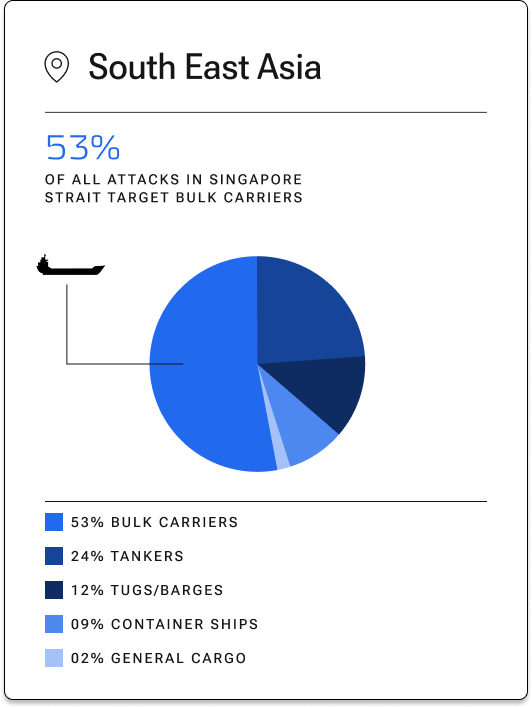
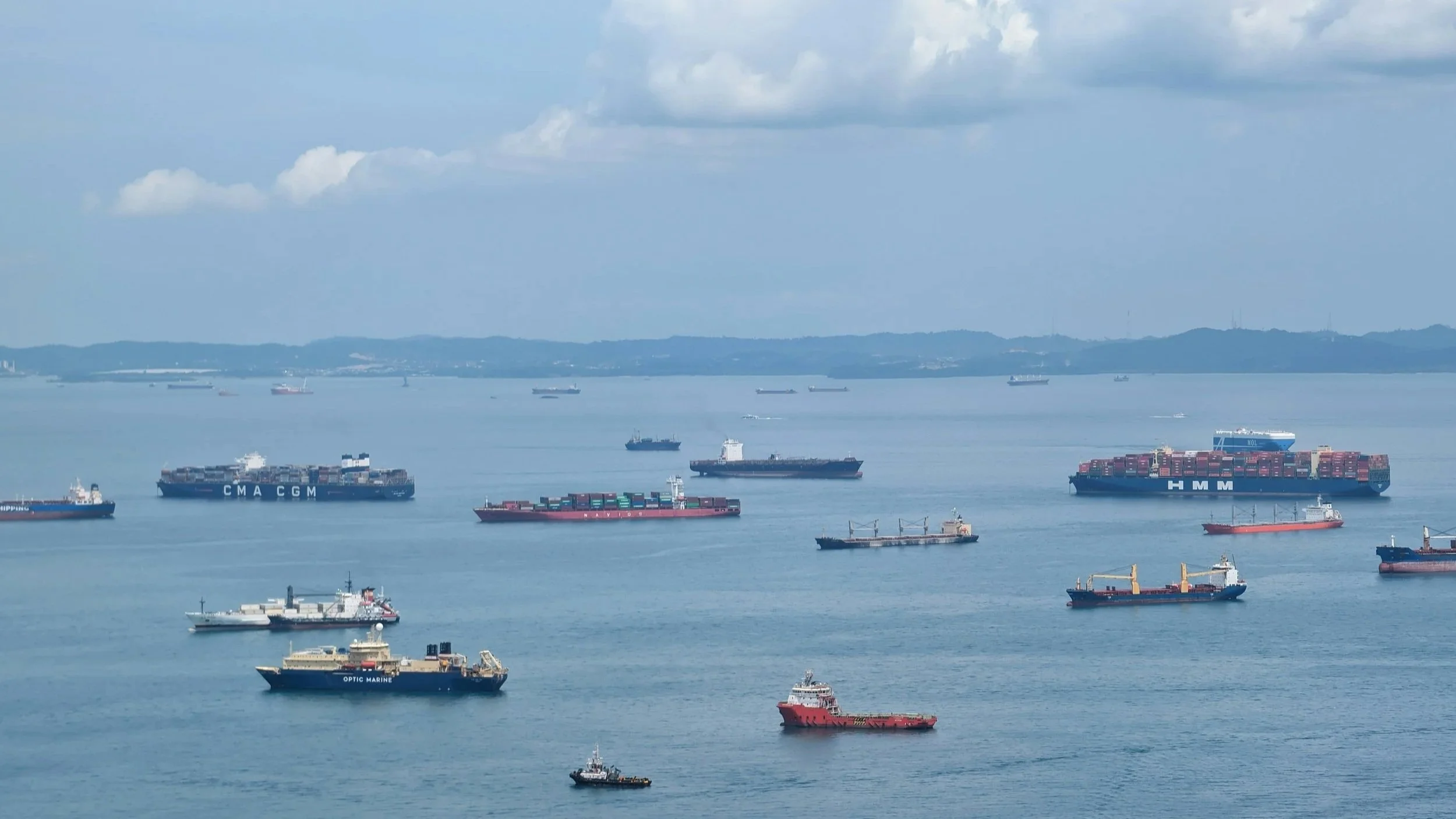
The recent surge in vessel boardings on the Singapore Strait prompted arrests and enhanced patrols by the Indonesian Marine Police.
Batam gangs remain active, diversifying into smuggling, while socioeconomic pressures continue to shape maritime crime trends.
Ahmed Al Sharaa must contend with domestic challenges to his rule, as he seeks to legitimise the power he acquired as leader of the Hayat Tahrir el Sham (HTS) and consolidate his grip on Syria.
A first challenge is that the HTS, now officially subsumed into the new Syrian Ministry of Defence, remains a coalition of militias with divergent orientations.
Balochistan’s strategic and economic importance has drawn both US and Chinese interest, particularly in its mineral and port sectors.
However, the province’s volatile security landscape poses significant risks to foreign projects while the potential for great-power competition over critical resources threatens broader regional stability.
Hybrid attacks are increasingly targeting supply chains to disrupt national stability and economic resilience. By exploiting vulnerabilities in transport, logistics, and warehousing, adversaries can inflict widespread disruption and blur the line between crime and state-sponsored sabotage.
As recent incidents in Europe show, cargo crime can be a new and effective modus operandi that adversary states can employ to achieve their goals.
In 2025, US trade policy continues to be one of the most disruptive influences on Asian commerce. Washington has imposed tariffs on a wide range of goods from China, particularly steel, solar panels, semiconductors, and batteries, while extending scrutiny to imports from Vietnam, Malaysia, and India.
The US argues that these measures protect domestic industries and national security. However, for Asian exporters, they increase costs, add uncertainty, and erode competitiveness.
In post-Assad Syria, the government is facing challenges to rebuild the country and its economy. Years of conflict and civil war have created a structural energy deficit. The Syrian population has been experiencing massive electricity and fuel shortages.
While the country has historically been a major producer and exporter of oil and gas, it is nowadays unable to resume the levels of activity that the industry saw prior to 2011. The infrastructure is in shambles and the continuing political tensions between the different factions are delaying the efforts to reinvigorate the energy sector.
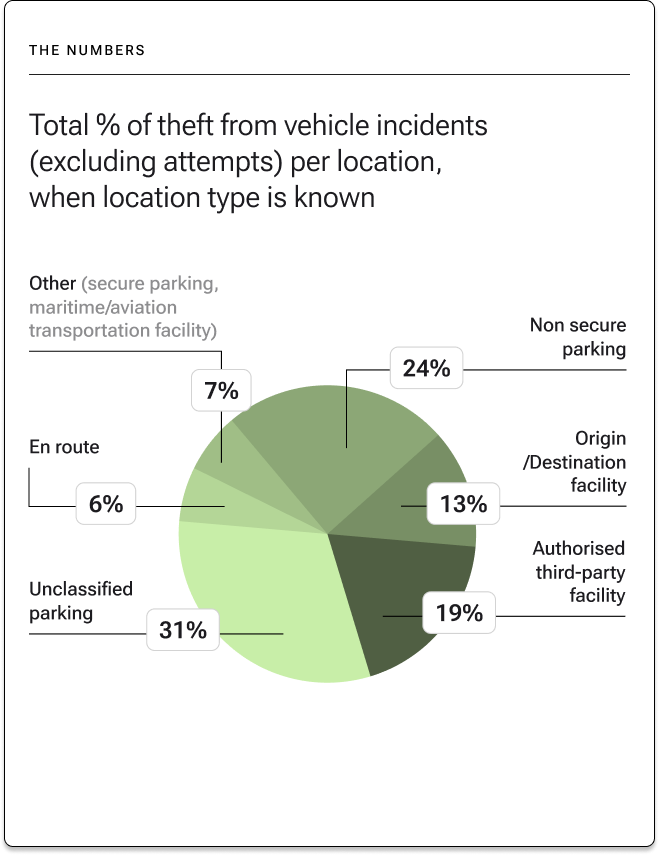
Cargo crime remains a persistent but often underreported threat, with fragmented data obscuring its real impact on supply chain operations. Misleading statistics and inconsistent reporting may create a distorted view of risk, resulting in misaligned policies and misplaced resources.
This piece argues that the solution is not simply to gather more data at any cost, but to focus on obtaining better data: grounded, contextual, and fit to support meaningful decisions.
The recent attacks in August, against Ukrainian port infrastructure at Chornomorsk and Izmail, do not in of themselves indicate a significant change in the threat picture to commercial maritime operations in the Black Sea.
Both Chornomorsk and Izmail have been targeted by Russian attacks before and therefore the recent attacks do not constitute any new scenario in relation to merchant shipping. The attacks emphasise the ongoing threats concerning the ports.
Unmanned technologies are increasingly shaping modern warfare, with most international observers putting considerable attention on modern conflict zones.
In Latin America, criminal groups continue to adopt unmanned technologies in increasingly sophisticated ways, despite financial constraints, that challenge state authority and regional stability.
Recent high-impact incidents in Germany, France and Italy underscore the severe risks posed by organised criminals to supply chain and commercial facilities. Utilising intelligence from LandRisk Logistics and adhering to TAPA standards can fortify your organisation's security and resilience against criminal activities.
We recorded three very different, high impact incidents on LandRisk Logistics that took place between the 14-17 June 2024 which highlight the dangers that capable, motivated and well resourced criminals pose to the supply chain and commercial facilities.
Last week, the spotlight was on Northern Europe's cross-border infrastructure in a shifting geopolitical landscape during the STRING and Region Skåne event at Connecting Europe Days in Brussels. With a focus on the Helsingør-Helsingborg fixed link and the Oslo-Göteborg railway stretch, the importance of these connections was underscored.
Hans Tino Hansen, CEO of Risk Intelligence, along with other specialists, added invaluable insights during the panel discussion, emphasising the intersection of civilian and military infrastructure needs.
Whilst the question of irregular migration, which continues to lie at the heart of European politics, overwhelmingly concentrates on maritime crossings of the Mediterranean Sea and the English Channel, recent data highlights a slow yet significant resurgence of enterprises placing road freight transport at the centre of their strategies.
This article delves into recent numbers, trends, and incidents to explain why irregular migration and smuggling remain a security threat to logistics operations.
Cargo theft criminals have been keeping the LandRisk Team busy during Q4 this year. Of particular interest is the presence of organised criminal groups (OCGs) carrying out cargo thefts on main logistics routes in Germany. OCGs present a significant threat to logistics operators as when they do strike the impact is often much higher due to the increased level of confidence, capability and resources these groups typically employ.
The A-1 motorway between Bremen and Hamburg has been hit particularly hard. On the evening of the 5th November 67 trucks had their trailers slashed in incidents at the Otsetal South, Grundbergsee South and Hatzte service/rest areas.
As naval drones and drone swarms redefine maritime strategies, a deeper analysis reveals how they challenge traditional naval operations and pave the way for innovative tactics in an increasingly complex and contested seascape.
In the ever-evolving arena of naval warfare, a transformation of profound significance is underway. This is evident in the use of smaller unmanned surface vessels (USVs), which has risen from smaller scale use in Yemen in the mid-2010s, to a veritable Ukrainian USV naval programme operating at full scale in 2023.
As Russia attempts to find ways to alleviate the impact of Western sanctions, and finding alternative trading partners and trade routes, China has seized the opportunity and is increasingly asserting itself on the Northern Sea Route. While highlighting the inequalities of the Russian-Chinese relationship, this will also have an impact on the wider geopolitical balance of power.
As global warming makes the Arctic's Northern Sea Route (NSR) more accessible, a complex geopolitical scenario is unfolding, with China taking the lead. Despite Russia's historical dominance over the NSR, it is now being challenged by China's robust shipbuilding industry and its aggressive Arctic strategies.
As technology advances, so does the potential for its misuse. Large language machines (LLMs) and image generators have become extremely popular, seemingly overnight, with the launch of ChatGPT 3 in November 2022. Since then, companies and individuals have scrambled to figure out uses for them for a variety of purposes or sectors.
LLMs continue to be upgraded and refined by their creators, and Adobe recently released their “Generative Fill”- AL tool for Photoshop, highlighting how the tech companies are competing fiercely to have the best possible software. However, these tools also have the potential to be used for malicious purposes, particularly in relation to hybrid threats.
The recent Saudi-Iranian agreement to mend diplomatic relations will likely improve maritime security at a high level by reducing a source of regional tension. However, the transactional nature of the agreement – where everything in the future is negotiable – leaves much room for regional proxy forces to continue to act. As well, the other potential flashpoint, between Iran and Israel, remains unresolved.
The Saudi-Iranian deal announced by China carries significant implications, although at this stage these remain mostly symbolic, and might mean more for Chinese-US relations than for the two middle-eastern rivals.
While hybrid threats are as old as war itself, the emerging threat from Russian aggression and rise of China has once again made hybrid threats relevant to consider even for private companies.
Hybrid threats refer to a combination of conventional and non-conventional tactics that adversaries use to achieve their objectives. These threats can originate from a wide range of actors, including state-sponsored groups, criminal organizations, or even lone individuals.
Published on 28 October 2025, the Gräns broadcast by Swedish public radio featured Senior Advisor Robin Häggblom discussing Nordic defence cooperation in the Arctic.
Robin noted that this marks a new era for Finnish officers, as others will now take key roles in decisions affecting the country’s defence.
Risk Intelligence Senior Analyst Thomas Timlen shared insights on Q3 2025 maritime security trends in Southeast Asia in a recent Seatrade Maritime article.
Published on 14 October 2025, the article by Risk Intelligence Senior Analyst Thomas Timlen highlights a notable improvement in Asian maritime security during Q3 2025, driven by a sharp decline in vessel boardings in the Singapore Strait.
Hans Tino Hansen, CEO of Risk Intelligence, shared his insights with La Presse on the risks posed by drone intrusions near critical European infrastructure.
Published 10 October 2025, the article notes growing concerns over recent drone intrusions near strategic European infrastructure.
Risk Intelligence CEO Hans Tino Hansen shared his insights with The Times on Denmark’s domestic security challenges following recent drone incidents.
Published on 1 October 2025, the article highlights Denmark’s vulnerability following recent drone incidents that disrupted national security and exposed gaps in its defence readiness.
Risk Intelligence Defence Analyst Robin Häggblom shared his insights with Yle in an evening news broadcast on recent drone sightings.
The broadcast, aired on 25 September 2025, highlighted Häggblom’s point that shooting drones down is difficult due to the risk of collateral damage from wreckage falling in populated areas.
In a recent interview on Sveriges Radio, Risk Intelligence’s defence analyst Robin Häggblom shared his perspective on NATO airspace violations and defence challenges.
Published on 25 September 2025 on Sveriges Radio, the interview covers recent intrusions into NATO airspace, including drones and MiG-31s over Estonia, and the alliance’s response.
In a recent interview with Svenska Yle, also streamed on Yle Areena, Risk Intelligence’s defence analyst Robin Häggblom shared his insights on the challenges of identifying hybrid influence and its impact on democratic societies.
Published on 5 September 2025, the article highlights defence analyst Robin Häggblom’s insights on hybrid influence and operations.
In a recent Lloyd’s List interview, Risk Intelligence Senior Analyst Dirk Siebels commented on the Houthis’ latest Red Sea transit guidance, highlighting their approach to targeting and communications.
Published on 13 August 2025, the article examines the Houthis’ newly released Frequently Asked Questions for vessel transit in the Red Sea and their attempts to clarify targeting criteria for shipping.
A recent article in Seatrade Maritime features insights from Risk Intelligence Senior Analyst Thomas Timlen on the evolving maritime security landscape in Southeast Asia in Q2 2025.
Published on 9 July 2025, the article highlights a 309% rise in vessel boardings in the Singapore Strait — with 45 incidents reported — now accounting for 85% of all regional incidents in the first half of the year.