
Dancing on the heads of snakes – Ahmed Al Sharaa’s ballet for power
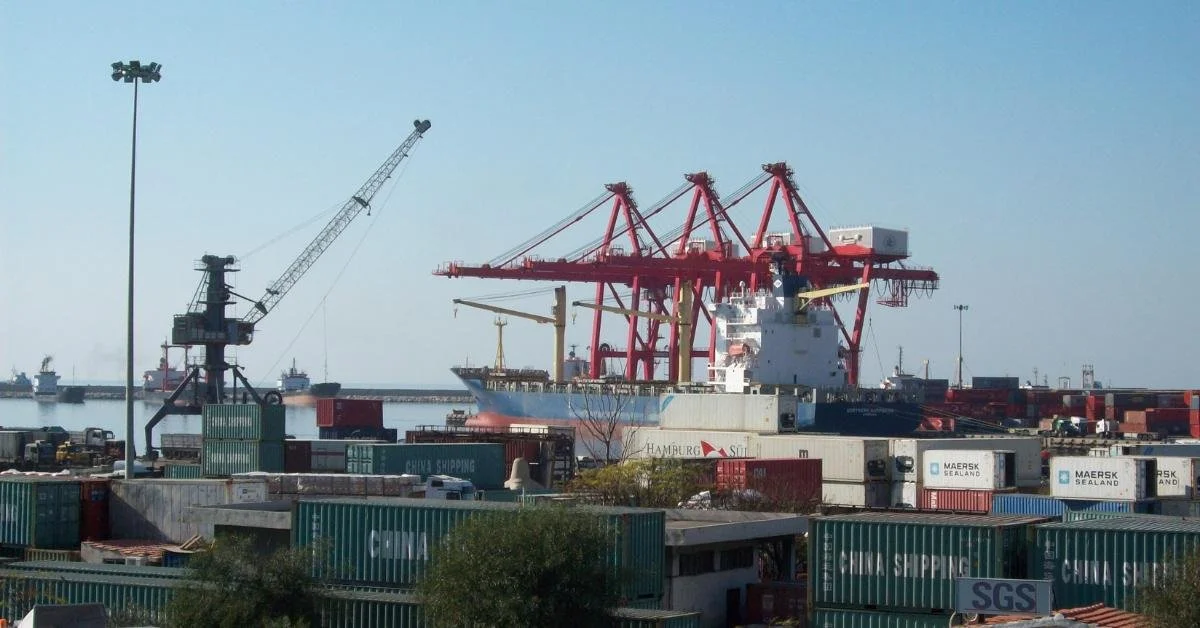
Container ships docked at Latakia Harbour with stacked containers on the quay. Credit: Wikimedia Commons
26 November 2025
Syria’s new ruler Ahmed Al Sharaa must juggle between satisfying the needs of Syrians and competing domestic and foreign agendas, while ensuring that he stays in power in a Syria that has yet to be pacified.
By Anas Mokdad - Security Analyst Intern
Ahmed Al Sharaa must contend with domestic challenges to his rule, as he seeks to legitimise the power he acquired as leader of the Hayat Tahrir el Sham (HTS) and consolidate his grip on Syria. A first challenge is that the HTS, now officially subsumed into the new Syrian Ministry of Defence, remains a coalition of militias with divergent orientations. Al Sharaa, who has successfully united disparate groups in their opposition to Bashar Al Assad, must now divide the spoils between the conquerors so that they do not turn against him.
This feeds into another pressing political problem. Living conditions, while certainly better than during the height of the war, remain difficult. Private and state entities must be mobilised and rebuilt to begin improving livelihoods and bring jobs to the millions of Syrians who only desire better lives, and do not necessarily feel a political attachment to Al Sharaa’s rule.
To ensure his men stay loyal to him, Al Sharaa must redistribute national and private riches confiscated from the former regime to his combatants, whose qualifications in managing conglomerates remain to be validated. This redistribution strongly risks leading to the same cronyism used by the Assad family to stay in power. Monopolies, regulatory capture and inherited corruption risk impeding the public and private sectors’ ability to quickly address the myriad issues Syrians must face daily.
Al Sharaa must also balance the appetites and desires of those outside Syria’s hinterland. Syria’s Kurds, who’ve effectively been autonomous for almost a decade, have no clear reason to submit to a Damascus unable to defeat them militarily, and they control Syria’s oil reserves. Meanwhile, Turkish economic interests loom large over Syria’s reconstruction, just as the Gulf States eye the opportunity to seize some of Syria’s most valuable assets – its hydrocarbons and infrastructure.
This is taking place with the US and Russia both wanting military bases in Syria and Israel annexing further Syrian territory. In all of this, Al Sharaa’s armed forces are now stretched across Syria trying to keep the peace, limiting his ability to mobilise fighting units.
To survive these challenges, Al Sharaa has resorted to diplomacy. He has parlayed a continued Russian military presence for oil deliveries, formalised US military presence in Syria, agreed to Chinese investments in major infrastructure investments, and signed agreements with the French to manage port infrastructure, while allowing Turks to keep their buffer zone in the North.
Al Sharaa’s rule is shaping up to be pragmatic and non-ideological, a moderately conservative, crony capitalist regime like so many others in the Middle East. Whether such a regime is able to satisfy the needs of the Syrian people remains an open question.
📢 INTELLIGENCE REPORTS:
Risk Intelligence reports deliver detailed, actionable insights, supporting decision-making and strengthening operational resilience.
Covering ports and terminals in Libya, the Northern Black Sea and Russia, the Middle East, regional updates across West Africa, the Western Indian Ocean, and Southeast Asia, as well as emerging threats like narcotics smuggling, our reports provide the intelligence you need to safeguard your operations. Whether you’re safeguarding your fleet, crew, or port operations, Risk Intelligence reports empower you to mitigate risks and respond proactively.