
Will 2026 be different for maritime security in the Black Sea?
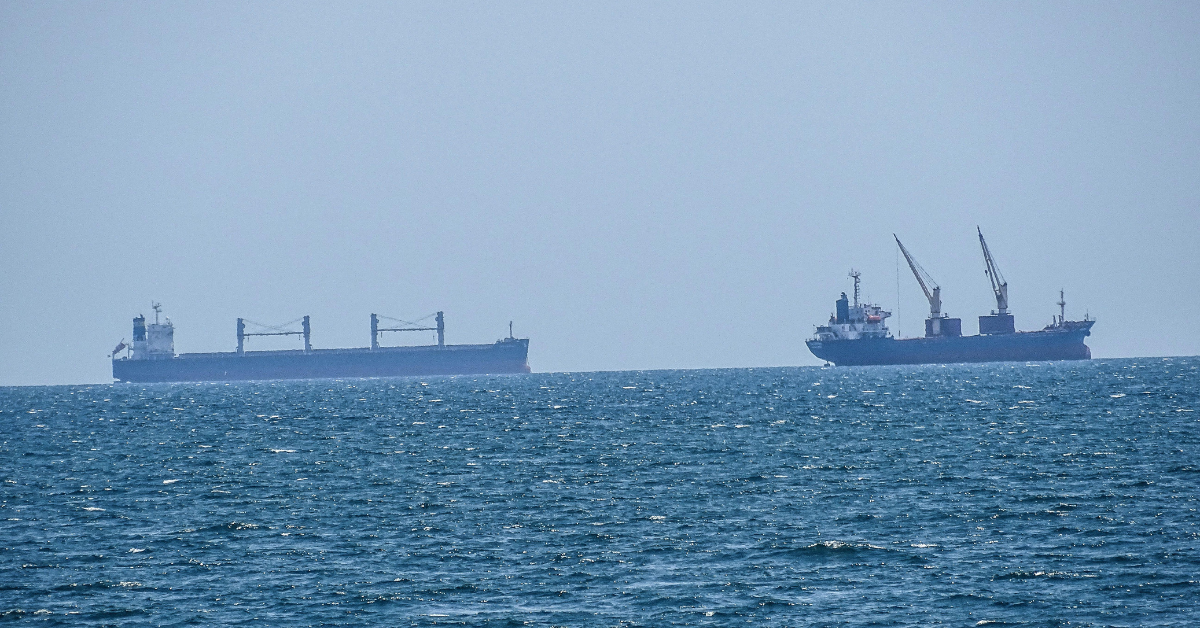
Commercial vessels moving through the Black Sea. Credit: Photo by Herman Vlad, Alamy
28 January 2026
Talks between the US, Ukraine and Russia to end the war continue, although little has changed compared to a year ago. The land contact-line barely moved during past year, which is likely why the Black Sea saw a renewed focus during the end of 2025 and into early 2026.
By Hans-Kristian Pedersen, Mediterranean and Black Sea analyst
It was previously assumed that 2024 would not see any developments to end the war in Ukraine and 2025 proved similar. Although there were continued varying degrees of intensity in terms of incidents in the Black Sea, the statistics on maritime related incidents indicate that 2025 was largely similar to 2024.
The political and diplomatic efforts made to establish a viable peace or ceasefire during 2025 did not bring about any tangible change to the overall situation. This was arguably due to a two pronged aspect: firstly, Russia still believes it can obtain its objectives with Ukraine, as long as it can continue under current circumstances; secondly, this is likely to continue for the duration, until the pressure on Russia is significant enough to force Russia to engage earnestly in talks to end its war in Ukraine.
Since the Russian full-scale invasion in February 2022, Ukraine has had to continue to work towards maintaining the international focus and support on Ukraine, at times competing with other global events and headlines. But keeping the focus on Ukraine is likely going to be a challenge for Ukraine throughout 2026.
The development and deployment of war related technologies continued to progress during 2025 and are likely to continue throughout 2026. Incidents in 2025, the wider Black Sea, highlighted not just the capabilities of both Russia and Ukraine to specifically target vessels underway – but also an apparent increased willingness. This means that the varying threats to vessels operating in the Black Sea will likely persist throughout 2026, if no actual and enforced peace or ceasefire agreement is reached. Therefore, there remains the likelihood of both targeted and collateral damage to vessels operating in the Black Sea. Both Ukraine and Russia have targeted each other’s maritime infrastructure to affect seaborne trade: Ukraine with its attacks on oil exports from Novorossiysk in particular and against shadow fleet vessels in the wider Black Sea, and Russia with its attacks on Odesa area ports. Early 2026 saw an intensification of these attacks.
The US commitment to helping end the war in Ukraine is uncertain. It is also uncertain if current US efforts are able to bridge the differences between Russia and Ukraine. The duration of the conflict remains unclear, therefore, and 2026 may indeed be a continuation of 2025.
WEBINAR RECORDING:
Maritime security in the Black Sea – strategic shifts and war-time dynamics
How does the war in Ukraine reshape the maritime landscape of the Black Sea? Our specialists discussed the evolving operational risks, naval engagements, sanctions, and the implications for shipping, insurance, and strategic stability in the region.
For deeper insights, download our Maritime Annual Incident Figures 2025, which highlight the most current and emerging threats shaping the maritime security environment: Maritime Annual Incident Figures 2025