

Mass protests in France cause disruption an chaos across the country
A coalition of France’s major labour unions began a nationwide strike on 07 March to protest the French government’s pension reform. Millions of people have since been mobilised in opposition to the reform during nine nationwide and interunion strikes. The demonstrations have caused major disruptions and increasingly grow violent. An end to the strikes is currently not in sight.
The strike has caused major disruptions, particularly affecting the French transport and energy sectors. Workers of French ports have implemented several so-called “dead ports days”, in which port activity was massively disrupted and ships were prevented from docking.

Asia: The impact of activism on specific sectors
In contrast with protesters in Europe and the Americas, activists in Asia are less prone to board vessels in the offshore and oil and gas sector, but rather have focused on protecting their fisheries and target operations that pose a threat to the fish stocks.
Unlike other regions, activities of activists in Asia that target the maritime shipping sector do not generate many headlines. Lately in the shipping press one activist activity that has recently been addressed are the strikes of shipyard workers in South Korea, some of whom have conducted hunger strikes and occupied vessels under construction.

Captagon smuggling: An expanding challenge in the Mediterranean
The sharp increase in the scale of the captagon trade and the diversification of smuggling routes witnessed in recent years ought to draw attention to the potential impact of this traffic on the Mediterranean security landscape.
Produced in Syria and, to a lesser extent, the Beqaa valley of Lebanon, it is overwhelmingly destined for markets in the Gulf countries, primarily Saudi Arabia and the UAE. The amphetamine-type stimulant has recently been at the heart of significant media investigations and political debates following its reported link with, amongst others, the Syrian government and Hezbollah.

Major disruptions ahead – new French pension reform strikes
The Confédération Générale du Travail (CGT) is organising a statewide strike on 7 and 8 March 2023, to protest the French government's proposed pension reform. The statewide strike is expected to cause significant disruptions, particularly for logistics companies.
Key sectors in the French economy are expected to be affected by the nationwide strike. The railways, docks and ports and energy industries are planned to be the most disrupted, whilst chemical industries and glasses and ceramics groups have also announced their support.
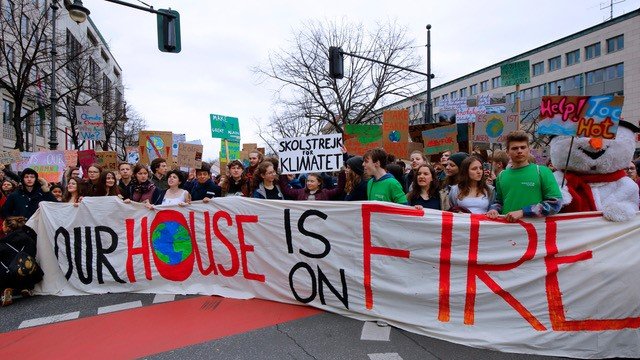
Climate activists united in Global Climate Strike 2023
The climate change activism group Fridays for Future is in their final preparations for their yearly Global Day of Climate Action, held on Friday, 03 March 2023. The climate activists will protest the continued use of fossil fuels, demanding an immediate end to the financing of international fossil fuel projects.
As protests are expected to occur on almost every continent, hundreds of demonstrations have already been registered worldwide. Most protests are planned in North America and Europe. The European countries with the most registered protests include Germany, the United Kingdom, Sweden, and Italy.

Somalia boosts blue economy policy
Several government ministries and foreign partners will collaborate to improve Somalia's maritime domain enforcement to prevent IUU fishing, including the support from the international community for capacity building and port security. Despite this foresight, onshore security remains weak, and the government must secure crucial districts in the south while also strengthening security in Mogadishu.
The federal government of Somalia in February launched its Women in Maritime Sector (WiMS) National Action Plan, part of its wider drive towards a comprehensive plan for building Somalia’s so-called Blue Economy in its maritime domain.

Transnistria - the Russian-backed breakaway region
Relations between Transnistria and Russia have been strong for a long time, but the war in Ukraine has increased attention on this relationship. With Transnistria seeing itself as separate from Moldova, certain issues , such as fraud, corruption and Russian military activity are of particular concern. Any major developments in Ukraine, leading to conflicts are likely to affect Moldovan-Transnistria relations.
The unrecognized break-away state of Transnistria is located between Moldova to the west and Ukraine to the east. Previously it rarely received much attention. However, following the Russian invasion of Ukraine on 24 February 2022 – this changed.

Sabotage as a hybrid threat to Europe's critical infrastructure
Recent sabotage attacks on Europe’s critical infrastructure have drawn attention to the issue of hybrid security threats and revealed how vulnerable we and our societal structures are to the criminal acts of hostile actors. To achieve more resilience in the face of recurring disruptions and disorders, governments and private businesses should implement contingency plans.
The attack on the Nord Stream gas pipeline in the Baltic Sea in September 2022 has highlighted the fragility of Europe’s most important infrastructures, and thus the significance of hybrid security threats.

Pakistan’s economic crisis impacts the shipping sector
Weak governance and political instability contributed to the crisis, causing investor confidence to drop and corruption to rise. More protests and blockades are expected in the coming months, leading to business disruptions and shipping delays.
Pakistan is facing a severe economic crisis. Its economy is on the verge of collapsing due to a political crisis, a depreciating Pakistani rupee and inflation at decades-high levels, devastating floods, and a significant shortage of energy. Pakistan has also been highly dependent on its import sector, particularly energy imports, which made the country vulnerable to soaring gas and oil prices.

Drug smuggling in the Arabian Gulf
As the Gulf countries grapple with soaring drug consumption rates, drug smugglers rely on merchant traffic to satisfy demand, with potential consequences for vessel operators.
Amid a spate of large weapon seizures from shows in the Indian Ocean, it is easy to forget that commercial traffic is frequently disrupted by massive drug seizures in the region’s ports. Indeed, gulf nations are experiencing a public drug addiction crisis not unlike the one seen in the US in the 1980’s: volumes of drug seizures in Gulf countries are increasing, and authorities seem swamped by the influx of narcotics. Saudi Arabia seized an estimated 119 million captagon pills in 2021, with figures suggesting that the trend will be increasing for 2022 and 2023.

Yemen: Prospects for peace?
Negotiations between the Saudis and Houthis could lead to a form of peace in Yemen, but not necessarily for all. With no major fighting ongoing, the factions’ struggle for control of hydrocarbon facilities, aided by replenished forces, could lead to new threats to shipping along Yemen’s southern coast.
Signs of a peace agreement may be emerging again in Yemen. Negotiations are ongoing between the Houthis and the Saudi government which appears keen to leave the quagmire it waded into in 2015. The negotiations may be paving the way for a de facto Houthi state covering the Houthi heartlands in Northern Yemen, along with Sana’a and Hudaydah. Though talk abounds of a de jure state with all the trappings of an independent country, it is difficult to anticipate the nature of the new entity.

Spanish police end 2022 with several arrests of criminal networks across Spain
With the year of 2022 coming to an end, Spanish law enforcement has had a busy three months, successfully dismantling numerous highly organised criminal cargo theft gangs, responsible for thefts worth several million Euros. Zooming in on some of these incidents helps us understand how criminal gangs operate and why breaking them up is such a difficult task.
During operation “Sawtruck”, Civil Guard officers detained 17 people for the theft of numerous trucks and cargo loads. The criminal network consisted of two different groups. The first group, disguised as ordinary truck drivers, visited truck parking lots overnight and slashed peep holes in trailer curtains to identify suitable cargo for theft.

Sudanese political deal: A new agreement with the same players
The new political framework deal has been presented by its backers as a breakthrough for Sudan’s transition, which will consecrate civilian rule over the country. Many others see this as a pie-sharing deal meant to appease rival political elites and to circumvent popular demands for democracy, with no indication of any commitment to a democratic process.
The signing of the new Political Framework deal on Monday 5 December 2022 in Sudan has been hailed as a step forward by several domestic and foreign parties. The deal stipulates that the military will “return to its barracks”, as General Burhan, leader of the October 2021 coup said, and that the government will gradually return to civilian control.

Southeast Asia: Ongoing smuggling and the impact on vessel operations
From drugs, fuel and consumer goods to migrants and refugees, smugglers are active throughout Southeast Asia, yet the impact on commercial shipping for the time being has generally been inconsequential.
There is a significant degree of smuggling activity taking place on the waters of Southeast Asia. Crime syndicates and human traffickers are continuously moving a wide range of illicit cargoes throughout the region including large quantities of narcotics, fuel, consumer goods, weapons as well as refugees, migrants and persons entrapped and relocated against their will. Law enforcement agencies in the region intercept shipments of methamphetamine, diesel and cooking oil, heroin, cannabis, ecstasy, tobacco, endangered/protected species alongside illegal transports of people on a regular basis.

Houthis and the oil trade: State-building through drone strikes
There have been a series of drone strikes on southern Yemeni terminals in recent weeks. They come in the wake of heightened tensions in the southern hinterlands, but also follow a number of announcements by the Houthis aimed at deterring oil trade, which they claim is robbing Yemenis of their wealth. This rhetoric is not new in Yemeni politics, and it echoes a feeling shared by many Yemenis, regardless of whom they support.
The oil trade, including its infrastructure such as in Ash Shihr and Qena, among others, has been the nexus of recent months’ fighting between various southern factions, some foreign backed. There have been many strikes on oil facilities, pipeline control facilities and overland oil convoys as far as 160 km inland, as Shabwani, Hadrami and other militias fight for control of the provinces and lucrative trade routes.

Somalia: New port shows improving maritime security
In recent years, Somalia's east coast has seen substantial improvements in maritime security. However, the security situation on land remains challenging, particularly in the capital, Mogadishu. In addition, the government is attempting to halt the flow of funding to the militant group al-Shabab.
A decade ago, Somalia’s east coast north of Mogadishu to the tip of Puntland was used to launch numerous pirate raids targeting merchant ships in the Somali Basin and to hold hijacked vessels just offshore while ransoms were secured. That Somalia has been able to open a new port facility at Garacad this year shows the significant improvement in maritime security that has taken place in this area.

Maritime security situation in the Black Sea and Sea of Azov
In relation to commercial maritime operations, the overall regional security situation in the Black Sea remains dominated by the ongoing Russian invasion of Ukraine. The situation directly relates to the north-western Black Sea and the Sea of Azov, and two recent events in particular have affected the maritime domain.
On 8 October, the Russian built Crimea bridge across the Kerch Strait, opened by Russian president Putin in 2018 for road traffic and rail in 2019, was attacked, closing the bridge and halting vessels transiting the Strait. Prior to the attack on the Crimea bridge, vessel traffic transiting the Strait had already been less, especially given that, at around the same time of the Russian invasion of Ukraine, Russia announced that the Sea of Azov was prohibited for navigation.

East Asia: North and South Korea Relations
In the absence of ongoing negotiations between the parties, North Korea has frequently demonstrated provocative behaviour in response to US and South Korean military exercises. The recent missile launches were reportedly aimed to imitate the use of tactical nuclear weapons against the South as a warning following large-scale naval drills conducted by South Korean and US forces.
On 2 November 2022, North Korea test fired 23 missiles at offshore locations, the most in a single day on record. One of the short-range ballistic missiles was launched in the direction of South Korea’s Ulleung Island, triggering an air raid alert. That same missile landed 26 kilometres south of the Northern Limit Line (NLL)— the disputed maritime border between North and South Korea.
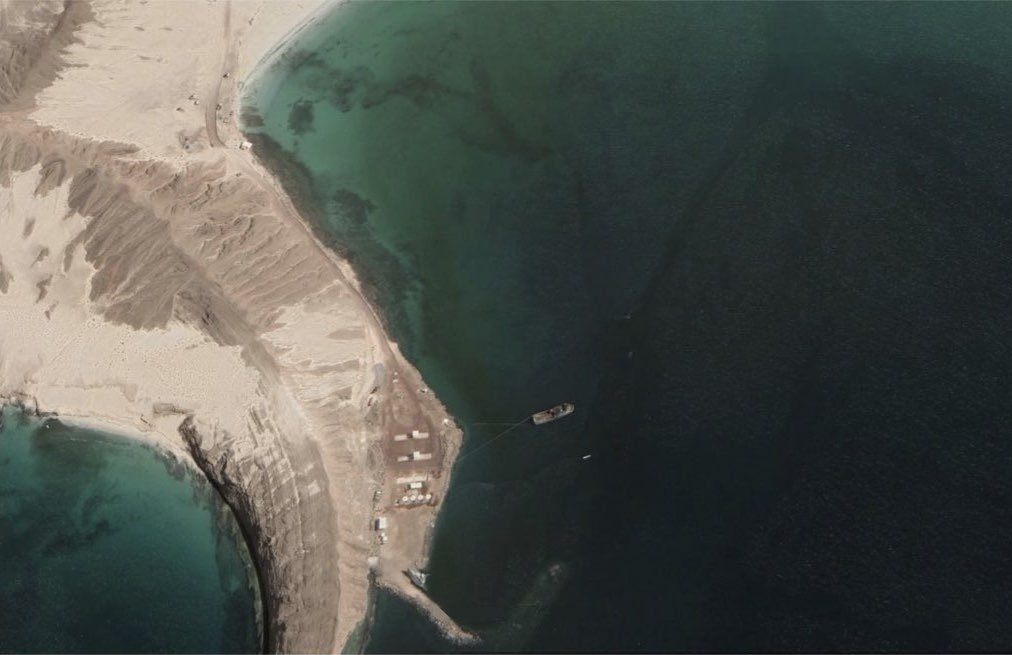
Yemen: Competition for oil sales threatens vessels
The redistribution of oil funds in Yemen has continuously been a point of dispute in Yemeni politics. As a result of the breakdown of the republican order, various factions have been competing for control of that income. In the meantime, several IED attacks on convoys escorting oil from one area to another resulted in fatalities, associated with parties claiming oil revenues.
The 21 October attack against Ash Shihr terminal in southern Yemen came as a surprise to many. In reality, it is the culmination of several months of tensions and fighting among Yemeni factions for control of the income generated from the sale of the country’s oil. Yemeni rhetoric on the issue has become increasingly aggressive, as factions accuse other of enabling laundering and smuggling by allowing the sales of oil to continue.

Russia is tampering with voyage documents and vessels’ geolocation to evade sanctions on grain and oil
Smuggling within the Black Sea has received increased attention since the outbreak of the war in Ukraine. Open-source intelligence has recorded a wide range of activities, including faked paperwork and manipulated AIS tracking. The most well-documented cases concern the transportation of grain from Russian-held territories in Ukraine, and Russian oil.
Smuggling activities on grain occur around the Crimean Peninsula and the Strait of Kerch to bypass international sanctions. The practices include tampering with documents for the vessel’s route and concealing the vessel’s geolocation by switching off (“going dark”) or manipulating its Automatic Identification System (AIS). In order to transport grain from Ukrainian territory, vessels turn off their tracking system in the northern Black Sea area, and then approach the deepwater Port Sevastopol at Crimea for loading.