

Maritime security incidents in India: Trends and forecast
Between 2018 to 2021 to date, India recorded 30 incidents at its ports and anchorages with the highest number in 2020, most likely due to the delays at ports caused by the Covid-19 pandemic. Analyst Katie Zeng Xiaojun provides this analysis of the numbers, the key areas to watch, and a forecast for the coming months.
The broad trends from 2018 to 2021 were generally consistent, with an average of seven incidents reported annually; the highest was reported in 2020 (10 incidents) and the lowest in 2021 (five incidents). The increase in 2020 is likely attributed to the delays at the ports due to the Covid-19 situation. More vessels stayed longer at anchorages and, thus, encouraged more theft opportunities.

Egyptian energy policy confronted
Turkey and Egypt’s foreign policies are in an uneasy opposition and not only in the Eastern Mediterranean. Both countries follow a forward-leaning policy ostensibly in their historical spheres of influence, which tend to overlap. The countries’ relationship, historically complicated by both nations’ self-perception as leader of their part of the world, continues to be marred by similar ambitions of becoming regional energy hubs.
To do so, it appears Egypt has opted for a multilateralist policy, likely with an awareness of its material limitations in exerting hard power beyond its borders. Recent examples of that approach are the Eastern Mediterranean Gas Forum, which has the potential to become a legitimate diplomatic platform, and Egypt’s coalition-building to counter Ethiopia’s plans for the Nile. By contrast, Turkey has prioritised power projection, notably through military deployments in Libya, Syria, and Bab el Mandeb as well as the aggressive assertion of territorial claims in the Mediterranean.

South-east Asia: The hidden threat of corruption to maritime operators
According to recent media reports, personnel of the Indonesian Navy has sought to extort vast sums of money from operators of vessels anchoring in Indonesian waters, without presenting the required authorisation. These media reports draw attention to the impact that corruption can have on maritime operations in south-east Asia.
With a regional average score of 42 out of 100 in the Transparency International 2020 Corruption Perceptions Index (CPI), the south-east Asia region continues its struggle to combat corruption. Ranked third amongst 180 countries surveyed with a score of 85, Singapore is consistently one of the top south-east Asian performers on the CPI, followed by Brunei (60) and Malaysia (51), all scoring above the global average of 43. Conversely, Cambodia (21), Myanmar (28) and the Philippines (34) earn the lowest scores in south-east Asia.

Black Sea: Troublesome waters
The Black Sea region has been regularly highlighted in media in recent years. Issues like organised crime and smugglers fraud and corruption are the factors that influence the local security setup. Hans-Kristian Pedersen provides an update of the current situation of the region.
The history of the Black Sea being a troublesome water to navigate is known since ancient times. However, these days the troublesome aspect includes issues of navigating the politics of region in general. This is particularly the case when considering issues such as the Crimean Peninsula, the ongoing conflict in the Luhansk and Donetsk regions, The Sea of Azov and tensions regarding the wider Black Sea such as the South Ossetia conflict in Georgia in 2008 and more the recent flareup of the dispute over the Nagorno-Karabakh territories between Armenia and Azerbaijan. All acts by the major regional actors, Russia, Turkey and Ukraine all influence the dynamics of the region.

Somalia vs. Kenya maritime boundary dispute
The outcome of the maritime boundary dispute between Somalia and Kenya adjudicated by International Court of Justice (ICJ) was to a great extent in favour of Somalia. Deteriorated political relationship between two countries brings up significant challenges.
In October, the International Court of Justice (ICJ) delivered its verdict in the case of the maritime boundary dispute between Somalia and Kenya, which has been ongoing for several years. The ICJ decided largely in favour of Somalia although it adjusted Somalia’s claim by a small margin. Kenya had been claiming a larger maritime area, particularly relevant as the disputed area is claimed to be rich in oil and gas. Kenya's government has stated that it will not abide by the ICJ’s decision.

Russia’s military base in Sudan
After 30 years of absence from the Red Sea, Russia has expressed interest in building a Naval base near Port Sudan. MENA Analyst Kais Makhlouf provides an overview of the Russian project, along with future predictions of how it is going to be implemented.
The 25 October coup in Sudan raised many questions as to the future of Russia’s projected “logistical support base” (MTO base) near Port Sudan, announced in November 2020. At the time, the announce was met with a mix of delight and perplexity in Russia, despite the deal having been in the making since 2015. Formally, the base would be Russia’s second foreign MTO base, after the Tartus base in Syria. Russia would be allowed to accommodate all types of weapons and systems, including nuclear powered and armed vessels without any oversight from the Sudanese state.

Pakistan: Impact of the Belt and Road Initiative
The China-Pakistan Economic Corridor (CPEC) projects under the Chinese Belt and Road Initiative, BRI, are causing a growing backlash in Balochistan and Karachi. There have been multiple terror attacks targeting Chinese projects and nationals in these areas, and they are likely to continue in the coming months.
China’s Belt and Road Initiative (BRI) is a strategy initiated by the People’s Republic of China that seeks to connect Asia with Africa and Europe via land and maritime networks to improve regional integration, increase trade, and stimulate economic growth. On land, it focuses on jointly building a new Eurasian Land Bridge and developing China-Mongolia-Russia, China-Central Asia-West Asia and China-Indochina Peninsula economic corridors. At sea, the BRI will focus on jointly building smooth, secure and efficient transport routes connecting major seaports along the Belt and Road.
As an example, the China-Pakistan Economic Corridor (CPEC) is a series of enhancements to Pakistan’s infrastructure to increase connectivity between China and Pakistan. However, there is a growing backlash against these BRI projects and affecting the security threats in Pakistan.

Transnistria: Will tensions rise as Moldova becomes pro-Europe?
The break-away area of Transnistria is located between Moldova to the west and Ukraine to the east and is recognised only by Abkhazia, Artsakh and South Ossetia. It rarely receives much attention, although with the various actors and areas of interest and tensions which ebb and flow in the region it would make sense to pay more attention to Transnistria. This is particularly the case when considering the wider region, such as the Crimean Peninsula, the ongoing conflict in the Luhansk and Donetsk regions, The Sea of Azov and general tensions regarding the Black Sea and the more recent flareup of the dispute over the Nagorno-Karabakh territories in the Caucasus.
Officially known as the Pridnestrovian Moldovian Republic, the area sought independence in 1990 following the breakup of the Soviet Union, with the thought of remaining within a future Soviet Union. Though this never materialised, close ties with modern Russia have been maintained and Russian peacekeeping forces have long had a presence in the area. It has de facto independence of sorts as part of Moldova, but various issues remain contentious – such as the Russian forces. Various talks have previously attempted to seek an end to the presence of the forces and the newly elected pro-European president of Moldova, Maia Sandu, has also expressed a desire to see the withdrawal of the Russian troops and military equipment.

Myanmar: Promises of multi-party elections and an end to the state of emergency - in 2023
On 1 February 2021, the Myanmar armed forces, or Tatmadaw, arrested the president, U Win Myint, the head of government, Aung San Suu Kyi, and other senior officials. They declared a one-year state of emergency. The army-appointed vice president Myint Swe took over as acting president and then handed his power to the country's military chief, Senior General Min Aung Hlaing. In August this year, the military ruler had promised new multi-party elections and a lifting of the state of emergency – but not until August 2023.
It has now been half a year since the military coup. More than 900 people were killed and 4,800 detained in protests that followed the coup. In the beginning, many protesters, such as civil servants, doctors and truck drivers, took part in the civil disobedience movement against the military takeover. However, the frequency of protests has since dropped as police informers were always on the streets to apprehend and detain protesters. More young demonstrators are observed to be holding regular flash mobs in Yangon, although the curfew from 10 pm to 4 am is still in place in the city.

Somalia: Walking back from the brink?
Somalia’s looming political crisis that threatened to spiral out of control and into open conflict between factions in April of this year came in response to President Farmajo’s attempt to extend his term by two years after an impasse over a new process for country-wide elections. Militia forces were arming themselves in Mogadishu and engaged in open clashes in the streets, but opposition presidential candidates and the presidents of Jubaland and Puntland provinces condemned President Farmajo’s extension and mobilised the opposition.
Since then, discussions led by Prime Minister Roble have reached a tentative compromise. Upper house elections will take place shortly – delayed from 25 July – which will lead to presidential elections in October: if everything stays on track.
There is still a risk of breakdown of the compromises reached and the process has exposed the fragility of relations between the federal government in Mogadishu and the various provincial governments. As well, against the backdrop of election instability, Somaliland recently and successfully carried out its own local elections, for some buttressing its case for independence

Security or volatility? Grey hulls and gas carriers mark Egypt’s return
Egypt’s navy is undergoing a thorough modernisation process, accompanied by a marked increase in its naval capabilities. In recent years, Egypt has acquired more than a few modern vessels, including French-Italian FREMMs, increased its maritime presence in both the Red Sea and the Mediterranean and engaged in large scale exercises with its partners. Egypt has inaugurated its new 3rd July naval base on the Mediterranean, close to the Libyan border, only a few years after opening its Berenice base on the Red Sea. At the same time, it has engaged in technology transfer to develop its native naval industrial capacity.
This is in line with Egypt’s goal to project power on both its maritime flanks. While such an ambition had already been formulated in years past, it comes at a time of heightened awareness among Eastern Mediterranean decisionmakers of the necessity of power projection at sea. Civilian leaders, and no longer only military figures, are expecting to compete for offshore resources in the Mediterranean.
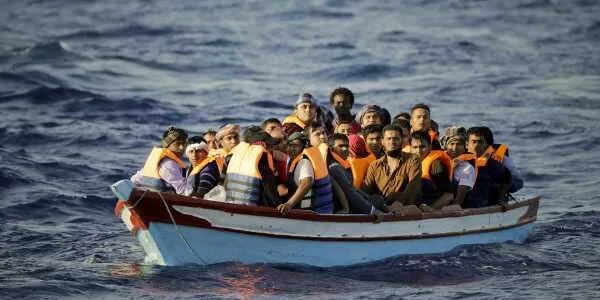
The route less taken: Irregular migration in the Black Sea region
Irregular migration into Western Europe often grabs headlines. But the reporting focus is mostly on the numerous attempts at crossing the Mediterranean from North African shores to Italian or Greek islands. And though Mediterranean crossings account for the most attempts, there are other lesser reported routes which present the same security concerns to regular shipping and logistics operations.
One such route is crossing the Black Sea. Though irregular migration is assessed as occurring at a lesser rate than across the Mediterranean, it cannot be discarded. Poverty, unemployment, corruption, conflict, and political instability are all factors that ‘push’ humans to migrate – and the Black Sea region is no different. Additionally, as regulation increases in the Mediterranean, migrant traffic may well increase in the Black Sea.

Cautious optimism as Malaysian and Philippine military forces continue to reduce the maritime security impact of the Abu Sayyaf Group
Notorious for its use of kidnap for ransom operations to finance its militant insurgency operations, the Abu Sayyaf Group's impact on maritime security has been curbed significantly by an enhanced military response by both Malaysian and Philippine forces in recent years. Still, the risk remains that ASG militants could take desperate measures to retain some control.
Over four years ago, on Thursday, 23 March 2017, three speedboats with armed men on board approached the SUPER SHUTTLE TUG 1 as it was en route from Cebu to General Santos with a Ro/Ro in tow. The tug was boarded and its captain and chief engineer were kidnapped. Philippine Armed Forces responding to the attack captured one perpetrator and one speedboat. Within four days both captives had been freed, and no ransom was paid.

Anti-lockdown conspiracies and social media pages are driving extremist right-wing recruitment
The right-wing extremist and terrorist threat is growing, as various groups across Europe are effectively using the Covid-19 pandemic and related conspiracy theories to recruit and radicalise not only more normal people, but also current and former military personnel. More people are being subjected to extremist content online as covid-19 conspiracy theories and anti-lockdown pages on social media are becoming more popular.
A current manhunt for a serving soldier in Belgium, as well overt attempts at recruitment of military personnel by Danish anti-lockdown groups highlight how they continually attempt to bring persons with tactical skillsets to their groups. Kristian Bischoff has this briefing on the threat.

Smuggling via the Balkan Route – a backstreet supply chain shielded by complexity
Smuggling activity on the Balkan Route into Europe is more readily and easily undertaken due to a lack of comprehensive law enforcement and issues of corruption. Established smuggling routes and procedures have less of a direct impact than when smuggling occurs within regular lawful logistics operations. But negative implications cannot be ruled out.
The Balkan Route, as it is known, is a term describing a loosely defined smuggling route, or corridor, identifying the geographical focus area of the smuggling activity. The route is often considered to be one of the main smuggling routes for illicit drugs and narcotics, particularly heroin, into Europe. It runs through the Balkan countries and is therefore predominantly a land-based route, though not exclusively as there are connections to maritime corridors as well.

Off the US sanctions list: Is Sudan returning to the global market?
Sudan is once again engaging with the wider world, having been removed from the US's sanctions list in December of 2020. The country is likely to return to the global markets it had been cut off from since the 90’s, with commitments of investment from both Saudi Arabia and US debt relief funds. But recent changes must still prove durable enough before Sudan's ports can open to international shipping again.
A weak infrastructure and chronic instability will be the main obstacles to Sudan’s return to the international scene. Domestic political tensions could yet derail the country’s transition. The government must prioritise its ports to stay on track. So what will it take for Sudan do to attract investors and trade to its stretch of coast?

Will China’s intensified territorial claims affect the innocent passage of the South China Sea for merchant shipping?
In 2012, China revamped its maritime strategy to become a “maritime power”, and incidents involving Chinese vessels in the South China Sea (SCS) increased significantly between 2012-2015. In 2020, numbers fell to a single incident and China's island-building efforts in the SCS appear to be nearing completion.
China’s interest in the South China Sea (SCS) dates back to the end of World War II and the defeat of Japan. The then Republic of China made repeated territorial claims to the SCS, including the Paracel and Spratly Islands, and opened research stations, defence silos and military-grade runways on the Fiery Cross and Subi reefs. Asia analyst Katie Zeng Xiaojun has this briefing for merchant shipping.

The attack on Palma in Mozambique: An insurgency getting out of hand?
The strategically important city of Palma in Northern Mozambique was attacked by insurgents from Ahlu Sunnah Wal Jammah on 24 March. The insurgents managed to grab control of large sections of the city and international personnel from the area were quickly evacuated.
Dr. Thomas Mandrup, Africa consultant, provides an assessment of the current security situation in the area and the impact on offshore operations, and of the emerging threat to port facilities in Pemba and outlook for shipping.

Recent bombing and arson attacks highlight threats against vaccine supply chains and infrastructure
Recent attacks against Covid-19 test centres in the Netherlands and Denmark highlights the extremist element to the anti-lockdown groups. These elements show that the movement likely wants to strike either symbolic targets related to the effort against Covid-19, or that they directly want to disrupt the effort itself. This may mean a new threat to the vaccine supply chain.
Capabilities in attacks may range from improvised incendiaries and explosives as seen in March, but the use of firearms cannot be entirely ruled out. Advanced tactics as seen in general attacks by individuals with terrorism tradecraft is unlikely.

Turkey and Greece: A seismic ripple in the eastern Mediterranean?
Last year saw what initially looked like a significant increase in tension and enmity in the eastern Mediterranean. The cause for concern was the activity of Turkish seismic survey vessels and the accompanying escort by the Turkish navy. At its most calamitous, this culminated in what might best be described as an accident, involving a minor collision between Greek and Turkish naval vessels in the contested area that took place in August 2020. Ankara stated it was solely undertaking seismic explorations in the eastern Mediterranean. However, others viewed the scenario as an exercise in asserting geopolitical stature.