
The missing link in Military Mobility: Europe's secure parking challenge
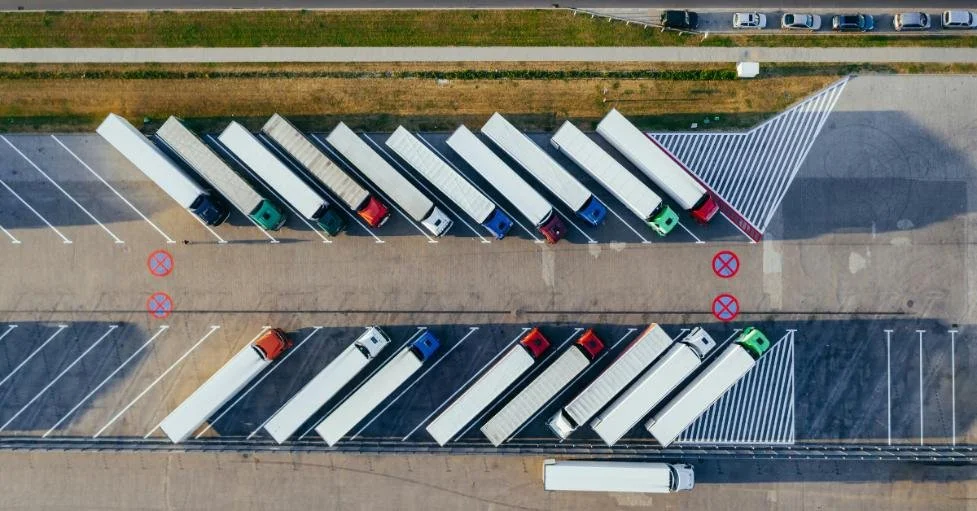
Parked trucks. Photo by Marcin Jozwiak on Unsplash
26 August 2026
Europe's Military Mobility initiatives are designed to improve the movement of personnel, equipment, and goods across strategic transport corridors. However, while investments often focus on roads, railways, and border infrastructure, a longstanding shortage of secure truck parking continues to expose drivers and cargo to criminal activity. As transport networks become increasingly important to both economic resilience and strategic mobility, the role of secure parking deserves greater attention.
By Georgios Kostoudis - LandRisk Junior Analyst
The European Union has been actively developing a new Military Mobility package aimed at improving the movement of military personnel and equipment across the continent. The initiative is expected to bring significant investment designed to enhance transport efficiency and simplify the regulatory processes governing the movement of military assets within Europe. As a result, transport corridors are becoming increasingly important to Europe's strategic readiness and economic resilience.
While attention is often directed towards the infrastructure that keeps freight moving, considerably less attention is given to where drivers stop.
The shortage of secure truck parking is a longstanding and well-documented challenge facing the European supply chain. Across the continent, the secure parking infrastructure is estimated to face a shortfall of approximately 390,000 parking spaces, with this deficit expected to grow further if current trends continue. The issue is particularly acute along high-density freight corridors in France, Germany, the Benelux countries, Spain, Italy, and parts of Central Europe.
This shortage frequently forces drivers to utilise industrial estates, lay-bys, service areas, and other unsecured locations when authorised facilities are full. In areas where security measures are limited or non-existent, both vehicles and drivers become more vulnerable to criminal activity. Such incidents can result in cargo theft, fuel theft, vehicle damage, operational disruptions, and, in some cases, violence or intimidation directed at drivers. Importantly, this challenge exists today, even before any additional pressure is placed on Europe's strategic transport corridors.
While the Military Mobility package represents a necessary step towards improving transport efficiency across Europe, it also raises several important questions. As strategic transport corridors become increasingly important and potentially experience higher levels of utilisation, additional pressure is likely to be placed on supporting infrastructure. This raises a critical concern: how will an already strained secure parking network accommodate increased freight activity while also supporting the movement of dual-use and military-related cargo?
Military Mobility is unlikely to be the cause of Europe's secure parking shortage. However, it may increase pressure on a system that is already struggling to meet demand. Strategic transport corridors are likely to see greater utilisation as investments improve connectivity and movement efficiency. Without a corresponding expansion of secure parking capacity, drivers may increasingly be forced to rely on unsecured rest locations, exposing vehicles, cargo, and personnel to elevated risks. In effect, investments designed to strengthen resilience could place additional strain on one of the logistics sector's most persistent vulnerabilities.
Addressing this challenge will require secure truck parking to be recognised as critical transport infrastructure rather than a supplementary service. Expanding capacity will depend on a combination of public investment, commercial incentives, and supportive regulatory frameworks. Encouraging private operators to develop new facilities, upgrading existing sites to recognised security standards, and incorporating parking requirements into future transport corridor projects could help close the gap. At the same time, enhanced facilities would not only reduce opportunities for cargo crime, fuel theft, and other security incidents but also improve working conditions for professional drivers.
As Europe strengthens its transport network to support both economic resilience and Military Mobility objectives, the focus should not solely be on how freight moves, but also on where it stops. Secure parking may not be the most visible element of transport infrastructure, yet it plays a vital role in protecting cargo, supporting drivers, and maintaining operational continuity. Without sufficient investment in these facilities, one of the supply chain's most persistent weaknesses may continue to undermine broader efforts to build a more resilient European transport network.
📢LandRisk Logistics:
Strengthen your supply chain against evolving security risks
LandRisk Logistics provides intelligence-driven insights to help organisations identify vulnerabilities and better understand security risks affecting their supply chains and transport operations. Contact us to learn how tailored intelligence can support more informed planning, strengthen resilience and help protect operational continuity.