
Could China control shipping around Taiwan without a blockade?
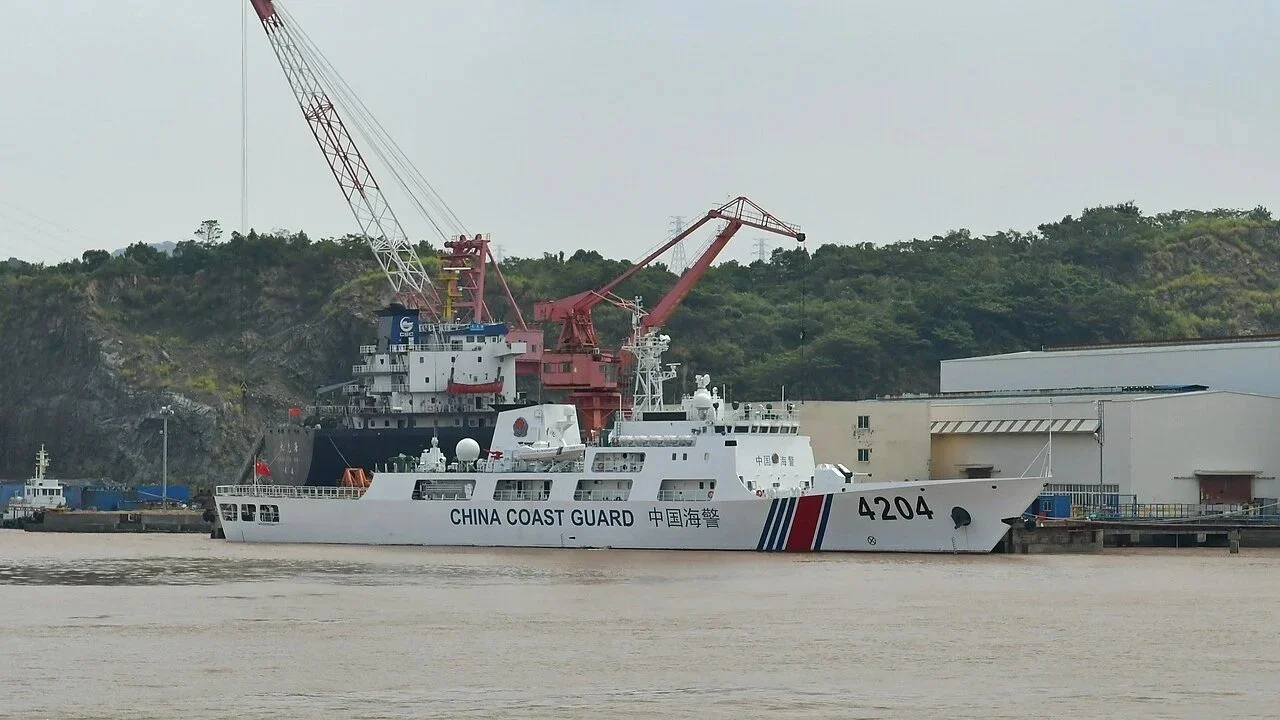
A China Coast Guard vessel. Credit: Photo by Tyg728/Wikimedia Commons
31 July 2026
China’s growing use of coast guard and military operations around Taiwan indicates that Beijing may develop options to control maritime access without immediately resorting to a conventional blockade. Commercial shipping continues to operate, but recent patrols and Taiwan’s preparations for possible inspections or seizures highlight the risk of future delays, conflicting instructions and disruption around Taiwanese ports.
By Katie Zeng, South and Central Asia Analyst
China’s pressure on Taiwan has traditionally been associated with military aircraft overflights, naval deployments and large-scale exercises. However, recent activity indicates that Beijing may also be developing less overt ways to influence shipping around the island. By using coast guard patrols and administrative demands, China could gradually interfere with vessels entering or leaving Taiwanese ports without announcing a full-scale military blockade.
In June 2026, Chinese coast guard vessels conducted patrols east of Taiwan and reportedly asserted authority over foreign commercial ships operating in the area. The Chinese vessels requested information concerning port entry but did not physically board or seize the ships. China described the patrols as legitimate law-enforcement activity, while Taiwan and several Western governments expressed concern that they could undermine freedom of navigation and regional stability.
The activity is significant because coast guard operations can be presented as civilian law enforcement rather than military action. This allows China to apply pressure while making it more difficult for Taiwan and other governments to decide when and how to respond. Such operations could also be expanded gradually, beginning with radio warnings or requests for vessel information before progressing to inspections, diversions or temporary detentions.
Taiwan demonstrated its concern on 25 June by conducting a tabletop exercise based on a possible Chinese maritime quarantine. The scenario imagined China requiring domestic and foreign vessels using Taiwanese ports to submit declarations through its customs system. Chinese authorities would then introduce inspections, boardings, searches and seizures, progressively restricting Taiwan’s maritime trade. The exercise did not mean that these measures had already been imposed. Instead, it showed the type of grey-zone pressure that Taiwan believes it may need to confront.
China reinforced its broader military signalling with live-fire exercises near Dongshan Island in the Taiwan Strait on 23 and 24 July. Although the drills did not close the Taiwan Strait to commercial traffic, repeated military and coast guard operations could shorten the warning period before a more disruptive action.
The immediate risk to commercial shipping remains manageable, but the operating environment is becoming more complex. Vessels could eventually face conflicting instructions from Chinese and Taiwanese authorities, uncertainty over reporting requirements, or delays when approaching Taiwanese ports. The main concern is therefore not only a sudden blockade. It is the gradual normalisation of Chinese control measures that could make interference with commercial shipping appear increasingly routine.
MARITIME SECURITY REPORTS:
Our Risk Intelligence reports provide valuable insights to assess the risks of specific routes and support decision-making with detailed threat assessments.
The Voyage Risk Assessment focuses on a vessel’s specific route and offers an independent third-party perspective on the necessary security measures. The Monthly Intelligence Report delivers comprehensive analysis of recent incidents and a threat assessment for three key regions, available via subscription.