
The impermanence of narcotics smuggling: emergent trends and unresolved challenges
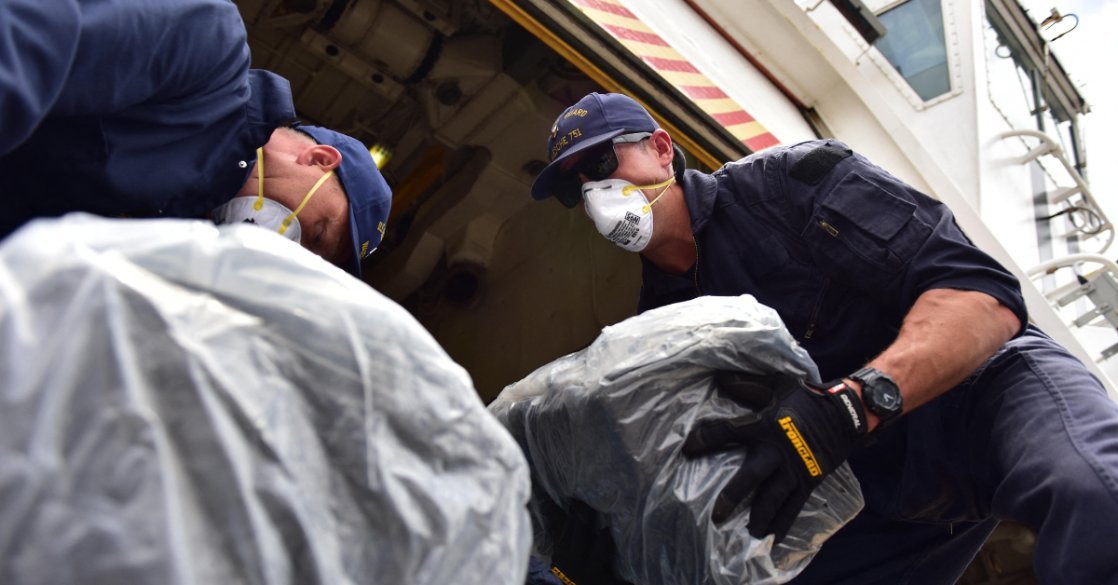
Illustrative image of a maritime counter-narcotics operation aboard a vessel. Source: Alamy
15 July 2026
The article explores why narcotics smuggling—particularly cocaine trafficking—remains highly relevant to commercial shipping despite the expansion of maritime security priorities. It highlights how rising cocaine production, increasingly sophisticated concealment methods, and adaptable criminal networks are generating greater operational, legal, and security risks for vessels, crews, and global supply chains.
By Diego Briceño - Latin America and Caribbean Analyst
Narcotics smuggling has long been one of the most prominent issues in maritime security with experts and governments stressing the vulnerabilities of international supply chains and mitigation measures. In past years, there was an expectation to broaden the agenda beyond traditional threats and address emerging challenges ranging from maritime infrastructure security to the green energy transition at sea. But why does drug smuggling remain relevant to commercial shipping? What does recent data tell us about emergent trends or unaddressed challenges?
In the first place, international bodies have documented the evolution of drug markets as well as the potential for drug production. The surge in drug availability has been particularly noticeable around synthetic drugs and cocaine. Beyond the well-known public health implications of synthetic drugs, the latter has larger consequences for commercial shipping as cocaine loads are trafficked in larger amounts, increasing the risk of vessel detentions, longer cargo delays, and the detention of crew members.
Rising cocaine production has also driven increasingly sophisticated smuggling methods. Shipping containers remain the most common concealment method by both seizure volume and number of incidents. For example, Chilean authorities recently seized nearly 108 tonnes of cocaine and ketamine impregnated in over one thousand tonnes of timber at three separate ports. The surge of drugs has also been present in the use of other techniques such as the all-time record over 30 tonnes reported by Spanish authorities in May 2026, making it the largest cocaine seizure within a cargo vessel to date.
Large numbers of drug seizures are not unprecedented. German authorities seized in 2024 nearly 25 tonnes of cocaine at the port of Hamburg while US authorities discovered in 2019 nearly 20 tonnes at a container ship. Likewise, reports of individuals hoisting drugs into merchant vessels off the coast of Ecuador are traced back to 2018 when the country had not consolidated as a major gateway for cocaine trafficking.
However, rising production and innovation have also been accompanied by greater criminal adaptability. The US bombing campaign against suspected smuggling vessels did not deter smugglers. At first, drug shipments were rerouted via land borders and Amazon tributaries to Brazil, while traffickers also increased their reliance on alternative smuggling methods. Not only large numbers of cocaine shipments continue along the Eastern Caribbean and Eastern Pacific, but traces of diversification remain.
Examples include two incidents in which stowaways were discovered guarding cocaine concealed in tampered containers while en route from Ecuador to Mexico as well as a failed attempt where Mexican cartel operatives sought to retrieve drugs from the sea after a crew member of a tanker was supposed to jettison 200 KG of cocaine from an oil tanker. Two separate confiscations at merchant vessels off the port of Mucuripe, in northern Brazil, and the notable increase in the use of rigid and semi-rigid inflatable boats off the southern coast of Spain are also indication of a growing incidence of such methods.
In conclusion, narcotics smuggling appears to be a never-ending problem with growing ramifications. Increased sophistication in concealment methods continue as more flexible networks thrive across even more dispersed criminal ecosystems, challenging state counter-narcotics interdictions and vessel operators seeking to maintain effective security controls.
Related report:
Further information can be found in the Risk Intelligence Narcotics Report. This subscription-based quarterly report provides detailed analysis of trafficking patterns, emerging cocaine smuggling trends, concealment methods and regional developments affecting commercial shipping.