
A turning point for maritime security in the Black Sea?
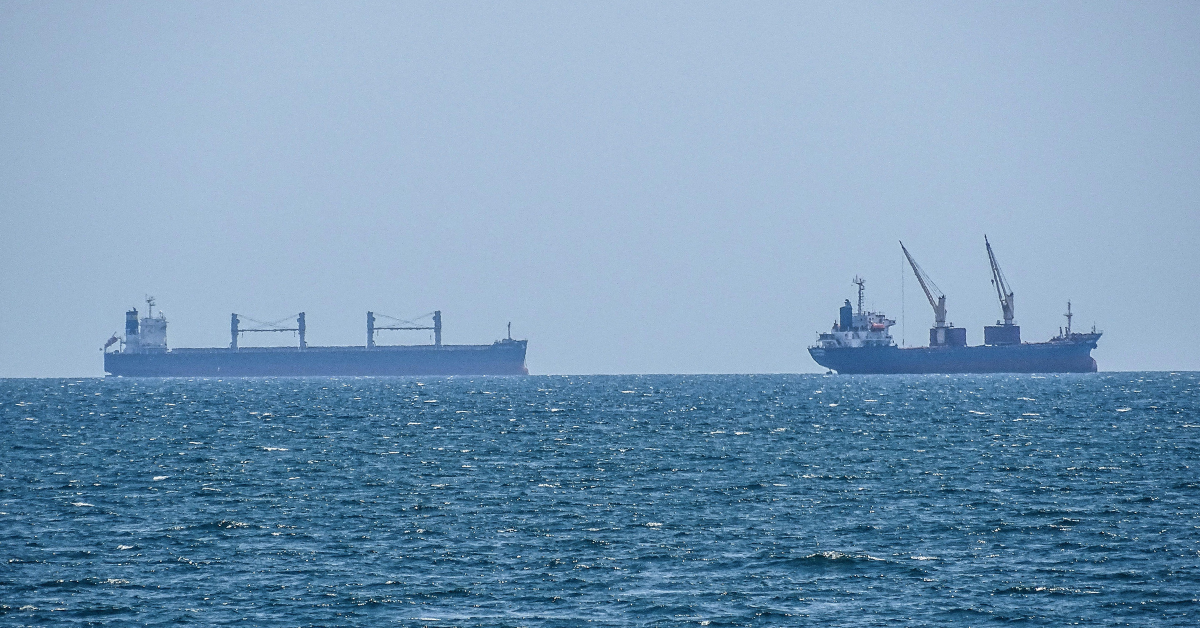
Commercial vessels moving through the Black Sea. Credit: Photo by Herman Vlad, Alamy
10 July 2026
Ukraine’s war with Russia has entered a more dynamic phase in 2026, driven by expanded drone production, longer-range capabilities and multi-target operations. Kyiv’s recent attacks in the Sea of Azov underline its growing operational reach, while both sides continue widening existing capabilities without necessarily escalating the conflict beyond the region.
By Hans-Kristian Pedersen, Mediterranean and Black Sea analyst
Whereas 2024 and 2025 did not see a notable shift in the Ukraine/Russia war, in terms of advantages to one or the other side, 2026 has seen several developments which are likely to prove significant to the wider conflict and any future realistic end to the war. There has been a recent increase in the number of attacks targeting vessels in the Sea of Azov. This is a demonstration of Ukraine’s capability to conduct multi-target operations successfully. Ukraine will likely continue to demonstrate this capability whenever the opportunity is considered appropriate and in accordance with their wider strategic objectives to end the Russian offensives by putting pressure on Russia’s fuel supply.
The war entered a phase of technological arms race when Russia failed to conquer Ukraine by force in the early stages of the war in 2022. The technological innovation by Ukraine, in particular, mean that the dimensions of the war have developed significantly during 2026, which is as much due to scale of drone production, but also due to the various applicability of the production scale, and reach in distance. The arms race has also developed into a numbers game, with whoever could deliver the highest number of drones being a determining factor.
Although the recent increase in Ukrainian drone attacks on vessels may constitute an escalation, Ukraine has achieved a more intensive and complex use of unmanned weapons systems in an established theatre: the Sea of Azov and Black Sea area. However, this may be the extent of the escalation. While isolated outlier incidents cannot be ruled out, particularly where they are considered necessary to achieve broader strategic objectives, there is currently no indication that either Russia or Ukraine intends to actively expand the conflict beyond the immediate theatre of war based on new weapon systems. Therefore, an increase in the number of targeted facilities, vessels, or other objectives should not necessarily be viewed as an escalation. Rather, it would represent an intensification in which existing capabilities are employed to further military and political objectives and to demonstrate the range of options already available to both sides.
MARITIME SECURITY REPORTS:
Our Risk Intelligence reports provide valuable insights to assess the risks of specific routes and support decision-making with detailed threat assessments.
The Voyage Risk Assessment focuses on a vessel’s specific route and offers an independent third-party perspective on the necessary security measures. The Monthly Intelligence Report delivers comprehensive analysis of recent incidents and a threat assessment for three key regions, available via subscription.
For maritime shipping operators with vessels in the Black Sea, please see our Black Sea (Ports and Terminals) Weekly Intelligence Report here: