
Second Line of Defense | The Arithmetic of Reinforcement: What Getting NATO to the Northern Nordics Actually Takes
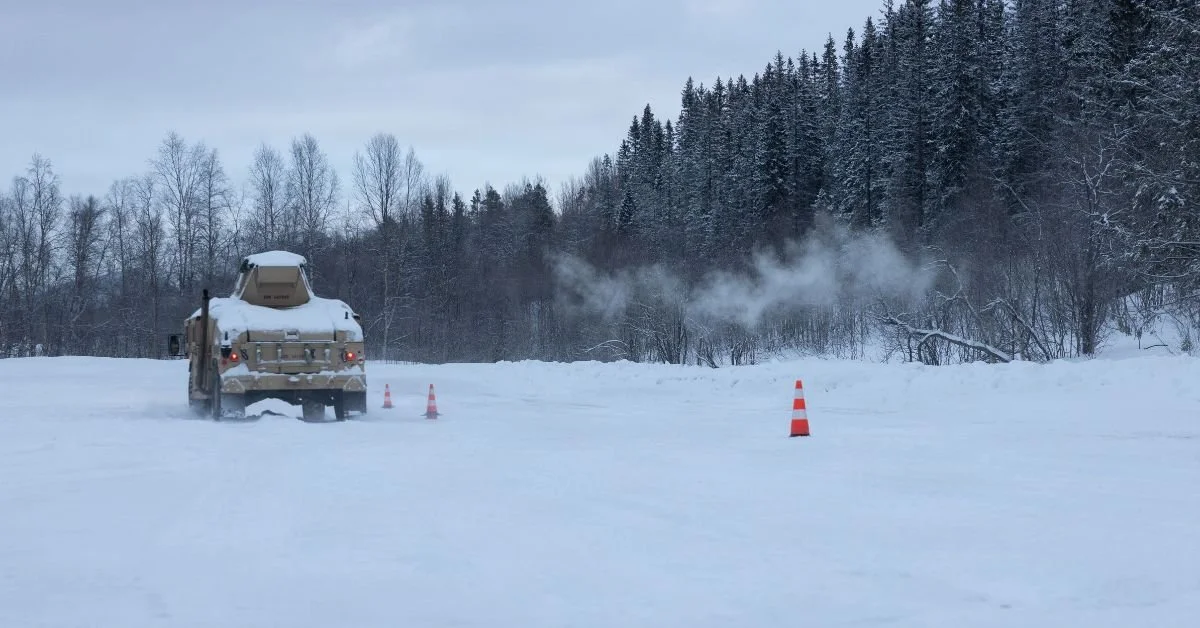
Illustrative image: A US Marine operates a military vehicle during winter driving training in Setermoen, Norway. Photo: Cpl. Apollo Wilson / US Marine Corps, via Wikimedia Commons.
In a recent article published by Second Line of Defense, Robbin Laird examines key findings from Risk Intelligence’s report, “Military Mobility Northern Nordics: Strategic infrastructure needs for military mobility and security of supply in the northern Nordics”, highlighting the infrastructure challenges facing NATO’s northern flank.
Published on 18 October 2026, the article explores the logistical demands of reinforcing NATO’s northern flank, drawing on scenarios involving the movement of up to 150,000 allied troops and approximately 39,000 vehicles across Norway, Sweden and Finland.
Laird highlights that the most significant infrastructure weaknesses lie not along transport corridors themselves, but at critical transfer points, where limitations in port connections, railway capacity and loading facilities can create bottlenecks. He also examines how disruptions to Baltic Sea shipping could place military movements and civilian supply chains in direct competition for transport capacity.
Building on the report’s proposed measures, the article discusses the importance of improving transport connectivity, investing in dual-use infrastructure and strengthening coordination between civilian and military stakeholders. Laird also emphasises the value of maintaining alternative systems to support resilience.
Laird's concluding observations underline that credible military reinforcement depends not only on the forces available, but also on the infrastructure, logistics and coordination required to move and sustain them.
Further reading: Military Mobility in the Northern Nordics
Interested in learning more about the infrastructure challenges and strategic considerations shaping military mobility in the Northern Nordics?
Explore the key findings and proposed measures outlined in Risk Intelligence’s Military Mobility Northern Nordics report.