
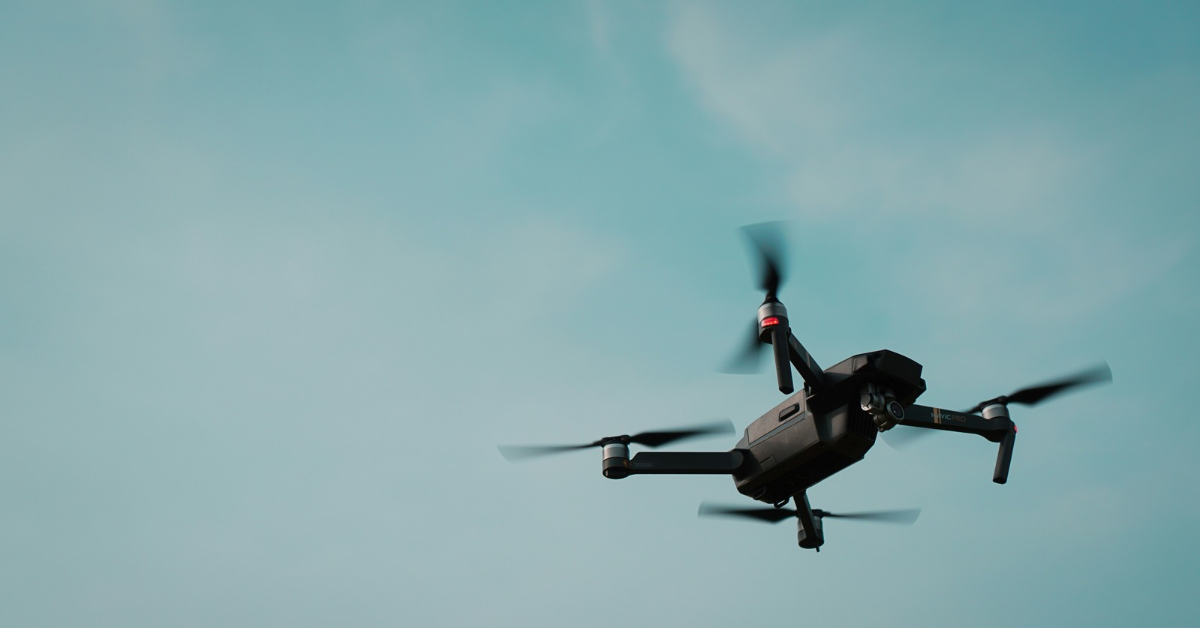
Illustrative image of a commercial unmanned aerial vehicle (UAV) in flight. Credit: Photo by Fikri Rasyid on Unsplash
06 November 2026
Sustained security setbacks and a failure to decisively incorporate disruptive technology into the country’s military doctrine make Colombia’s security landscape a significant regional threat. While most international attention concentrates in the resurgence of Venezuela’s oil and gas industry, the inadequate military adaptation and lack of political commitment in Colombia raise concerns of decades of security gains being reversed, spreading asymmetric know how into neighbouring South American countries.
By Diego Briceño, Latin America and Caribbean Analyst
Venezuela currently enjoys significant international attention as it reports a notable growth in commercial maritime activity linked to a surge in oil exports. Venezuela made it to international headlines once more after the main opposition leader entered the country despite repeated failed attempts reported in past weeks, setting expectations of political instability in the short term. Nonetheless, there is a simmering security crisis on the other side of the border that has the potential to become a game changer for the north of South America.
Colombia has been a security success story leveraged on an unprecedented bilateral cooperation program with the United States. However, the country has been reporting signs of stagnation along with security setbacks that has raised concerns over potential consequences for the country and its neighbours. The most significant concern is associated with the number of men in arms, which grew about 13,000 in the last four years. The number of terrorist attacks also grew from less than 380 attacks in 2015 to an all-time record of 1,398 in 2025 along with other repertoires of violence that included the killing of a presidential candidate, and at least two separate armed strikes in coastal ports cities of the Caribbean.
The disruption from commercially available technologies can be tracked to the mid-2010s, but it was not until the past few years when armed groups decided to incorporate Unmanned Aerial Vehicles (UAVs) in their warfare tactics. According to an ACLED publication, Colombia has become the epicentre of drone weaponisation in the Americas with over 670 incidents, 72% of which surged through 2025 and 2026. Security forces have intercepted nearly 4,000 drones in the months of July and August 2026, while attacks against riverine patrol boats led to the killing of a Colombian marine in October 2026, following a sustained campaign against marine personnel in at least three other areas of the country.
The country continues to deepen its vulnerabilities by showcasing worrying signs of misdirection. The Colombian civilian and military leadership have also failed to incorporate agile thinking in the way it monitors threats and responds to them. This cannot be more evident in the government’s intension to halt funding for purchasing a wide range of mobile, semi-mobile and stationary Counter-Unmanned Aerial Systems (C-UAS) to counter the drone threat.
Moreover, there is a reluctance to develop a comprehensive strategy in which the Colombian Armed Forces decisively incorporate hybrid warfare and disruptive technologies into their military doctrine. Despite years of war in Ukraine, Colombia has done little to build bridges that would allow it to learn how to implement the industrial production of drones according to its military needs, much less on how to incorporate drone technology, enhance multi-domain operations through improved communications, or how to counter similar threats.
The main reason is the lack of political will as pledging for a numerically larger military force is the most populist approach. To make matters worse, the country’s fiscal crisis appears to be a major obstacle as traditional procurement strategies are likely to be stalled in the short term.
In light of the current trend, it is worth asking whether we are on the verge of losing decades of security gains and to what extent Colombia will export threats to its closest neighbours, as it has done for the past half a century. This includes concerns at coastal locations as drones allow criminal elements to target strategic infrastructure, security forces, and the civilian population living or working along the country’s supply chains. In addition, it is a cost-effective resource to hamper the government’s legitimacy and fragile governance mechanisms without engaging in traditional endeavours of exerting complete territorial control.
Stay informed of evolving security threats
The Risk Intelligence System provides intelligence, incident monitoring and threat assessments to help organisations stay informed of emerging security risks and support operational decision-making.