
ACTIVINT? Ship spotting and the potential rise of ‘activist intelligence’
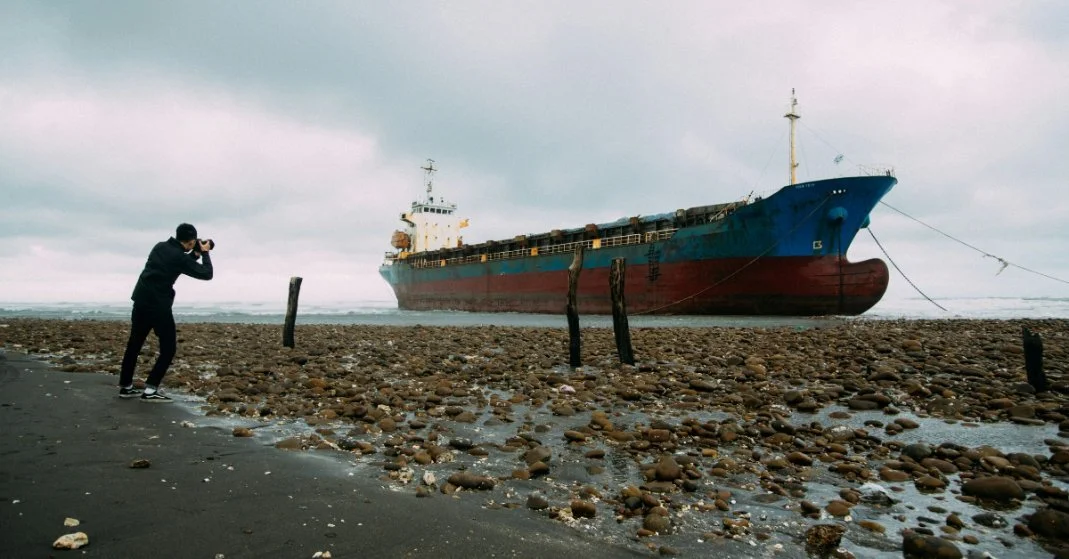
A man photographing a cargo ship. Image Credit: Photo by Andrew Leu on Unsplash.
28 October 2026
Recent trends within the online community of ‘ship spotters’ show increased focus on monitoring Russian shadow fleet activities essentially as a form of activism. If this trend of ‘activist intelligence’, or what we may call ‘ACTIVINT’, continues or spreads beyond this niche, it could potentially have implications on both maritime intelligence and the field of open-source intelligence.
By Mikkel Høgh Jensen - Security Analyst Intern
The validity of open-source intelligence as a discipline is well known in the intelligence field. For instance, independent analysis of open-source satellite imagery was able to determine that Russian stockpiles of heavy armour and artillery were considerably depleted a few years into the war in Ukraine. OSINT is a highly dynamic field in which new kinds of sources and methods consistently appear. In the area of maritime intelligence, one such development may be underway regarding alternate information sources in assisting vessel tracking.
‘Ship spotters’ are hobbyists who focus on photographing and documenting maritime and naval vessels and posting these findings online. This online community is quite niche, but recent years have seen interesting developments, specifically in relation to the war in Ukraine and the Russian shadow fleet. Online search trends indicate a significant increase of interest in ship spotting beginning around September of 2023, and interest has stayed at or above this level since.
Though there are no definite signs of correlation between this trend and the rise of Russian shadow fleet activity, there are considerable indications. The increasing interest seems to be noticeably concentrated in European countries, particularly those with coastal areas known to see significant shadow fleet traffic, such as Estonia, Denmark, and Greece. Analysis of online ship spotting sub-communities of these countries indicates that shadow fleet-related posts see a disproportionately large amount of interaction compared to other posts. Several online ship spotter accounts are entirely dedicated to documenting shadow fleet movements. This suggests that the increased interest is not just in the ship spotting hobby per se, but rather ship spotting as an act of protest, activism, or civil service.
This development may have an impact on the maritime landscape. Customs enforcement agencies appear to be taking notice of this wave of ‘activist intelligence’ and are encouraging civilians to document and report any relevant information on illicit activity. The shadow fleet is entirely reliant on obfuscation to remain effective, and thereby any additional attention on its vessels would be detrimental to its operations. This could make their efforts to evade sanctions more difficult or even apply pressure to their activity.
There may be implications beyond this area as well. Should this trend persist or carry over into other areas, it may have a considerable effect on the open-source intelligence field. OSINT largely relies on publicly available information that exists not necessarily for the purposes of intelligence directly, and analysts therefore must make significant effort in finding and sorting relevant intel. However, as opposed to the usual hobbyists, this new kind of ship spotter does actually collect information for the purposes of providing intelligence; specifically, to spread awareness of and hinder shadow fleet activity. Should this sentiment spread, analysts could essentially crowdsource information through this ‘ACTIVINT’, to coin a term.
A massive influx of ship spotters keeping an eye on shadow fleet activities is of course unlikely, and expectations should be curbed. Nevertheless, should this trend of ACTIVINT develop further, it could possibly add a new dimension to the OSINT field.
MARITIME SECURITY INTELLIGENCE:
Stay informed of evolving maritime threats and vessel activity
The Risk Intelligence System provides maritime security intelligence and threat assessments, with additional capabilities for vessel tracking and sanctions monitoring to support informed operational decisions.