
The welfare of seafarers in the face of armed conflict: the case of Hormuz
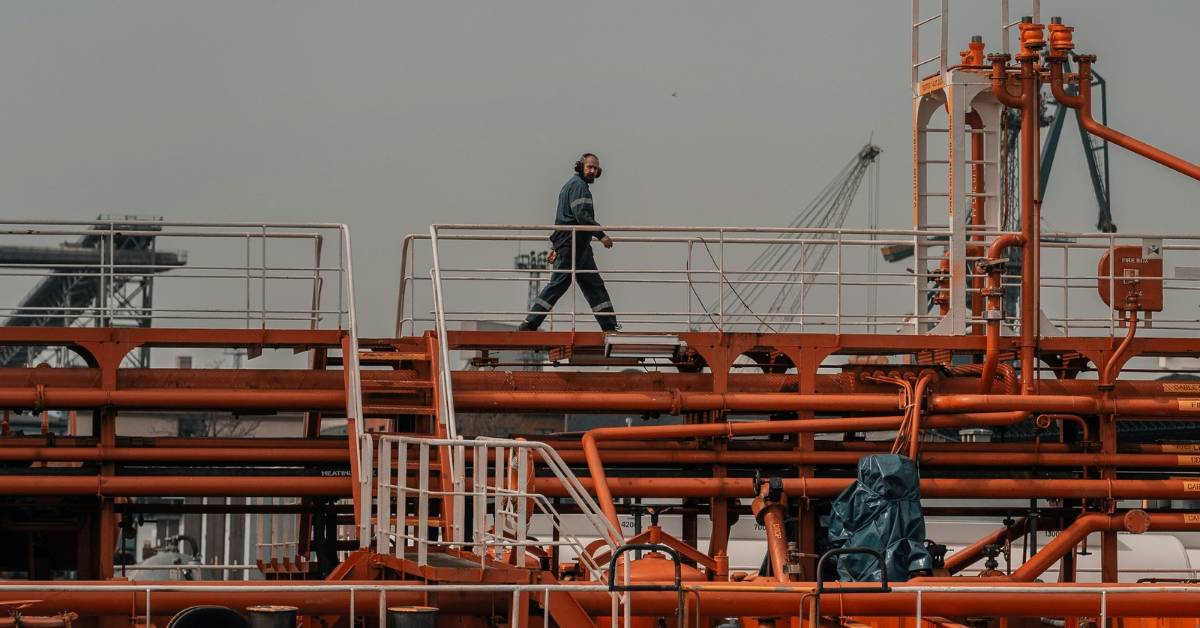
A crew member walks along an elevated walkway on board a commercial vessel, surrounded by deck piping and equipment. Image credit: Photo by Kajetan Sumila on Unsplash.
08 October 2026
The shipping industry is going through a period of great instability, marked by ongoing armed conflicts, the maritime implications of which are particularly significant. Whilst these threats continue to highlight the fragility of global maritime supply chains, it is seafarers and crews who are most at risk. The Strait of Hormuz illustrates this situation: crews face the threats of being targeted, inspected, diverted, jammed and subjected to uncertainty. This pressure has led several states to step up protection for their seafarers, which could exacerbate recruitment difficulties in the maritime industry.
By Louis Borer - Senior Analyst
The shipping industry is currently operating in an environment increasingly characterised by geopolitical rivalries. In September, the Consultative Shipping Group (CSG) – which brings together 18 maritime nations representing more than a fifth of global trade by tonnage – published its first joint statement in over sixty years of existence to warn of the erosion of the principles guaranteeing safe navigation under acceptable conditions. The organisation believes, amongst other things, that the proliferation of armed conflicts and tensions surrounding strategic chokepoints reveal a structural shift in the operational environment of maritime transport.
According to the CSG, the Covid-19 pandemic, transit restrictions at the Panama Canal, the war in Ukraine and its consequences in the Black Sea – as well as in the Mediterranean – and tensions in the Middle East have demonstrated the growing vulnerability of maritime supply chains, and in particular of seafarers, who are the first to suffer. This transformation is directly reflected on board ships, as notably illustrated by the latest Seafarers’ Happiness Index, which shows a significant decline in crew morale. In the second quarter of 2026, the seafarers’ well-being index fell to 6.87 out of 10, compared with 7.18 three months earlier. Route diversions, delays, heightened inspections, communication restrictions and additional security procedures are no longer seen as temporary but as the new normal.
The crisis in the Strait of Hormuz illustrates this mounting pressure. As the first victims of the war of words and contradictory statements from Iran – as well as from the US – it is extremely difficult for seafarers and shipping companies to anticipate or plan for a potential transit through the strait. Constantly on the alert, seafarers have very little scope to plan and must be prepared for rapid changes in a highly volatile security situation, sometimes determined by the ship’s flag, its owner, its cargo or simply the perceptions of the actors present in the region. Beyond the real threats of being targeted and struck by drones or missiles, a significant threat in itself, crews must consider the risks of inspection, boarding or diversion, compounded by frequent GNSS and GPS interference which complicates navigation, whilst maritime congestion increases the risk of collision. Shipping companies are also forced to consider reports – whether true or not – of mines in the strait, the potential consequences of which remain unaffected by any ceasefire.
At the height of the crisis, for crews, this reality meant maintaining constant vigilance under extremely harsh day-to-day conditions. In this hostile environment, some states have sought to adapt their recruitment policies to protect their seafarers. Following the deaths of three Indian seafarers on board the product tanker SETTEBELLO after a US strike off the coast of Oman on 10 June 2026, as well as other incidents involving Indian crews, India recommended limiting the deployment of its national seafarers to conflict zones. In the wake of this, following the deaths of two Filipino seafarers during the attack on the crude oil tanker SIDR in the Strait of Hormuz on 31 August 2026, the Philippine authorities reiterated that their seafarers have the right to refuse to embark on voyages to high-risk areas, and announced that they would monitor the shipowner’s compliance with mandatory safety measures.
As many conflicts remain ongoing and the structural shift in the operational environment of maritime transport continues, the impact of these crises could therefore have medium- and long-term consequences, including difficulties in recruiting crew and calls for stricter compliance checks throughout the shipping industry.
MARITIME SECURITY INTELLIGENCE:
Navigate uncertainty and make informed decisions with maritime threat intelligence and voyage-specific risk assessments.
Risk Intelligence's Voyage Risk Assessments provide independent, voyage-specific insights into security threats and recommended mitigation measures, helping operators plan safer transits through high-risk areas.
Our Middle East Weekly Intelligence Report provides regular analysis of maritime security developments and evolving threat levels across the region, including the Persian Gulf, Gulf of Oman and southern Red Sea/Gulf of Aden.