
Shifting currents: How US tariffs and Asian diplomacy are reshaping regional trade
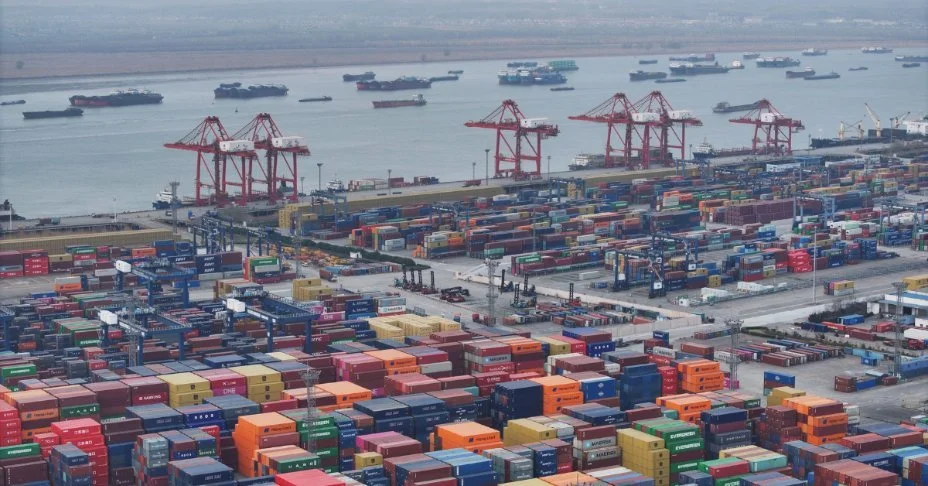
Container stacks at Nanjing Port, reflecting maritime trade in Asia. Credit: Cynthia Lee, Alamy
21 October 2025
As the US tightens tariffs and trade restrictions, China, India, and Russia are promoting a new, multipolar world order. Together, these forces are redrawing trade routes, reshaping supply chains, and redefining how commerce and power intersect in Asia and the wider Indo-Pacific.
By Katie Zeng Xiaojun - Analyst, North, South and Central Asia
The maritime region stretching from the South China Sea through Northeast Asia remains relatively stable, with few immediate threats to commercial shipping. Yet, beneath the surface, new political and economic forces are reshaping trade flows and strategic priorities across Asia.
In 2025, US trade policy continues to be one of the most disruptive influences on Asian commerce. Washington has imposed tariffs on a wide range of goods from China, particularly steel, solar panels, semiconductors, and batteries, while extending scrutiny to imports from Vietnam, Malaysia, and India. The US argues that these measures protect domestic industries and national security. However, for Asian exporters, they increase costs, add uncertainty, and erode competitiveness. The US has also imposed additional fees on vessels built, owned, or managed in China, deepening the economic divide between the two largest economies.
As a result, Asia’s trading landscape is evolving. Countries across the region are reducing their reliance on the US market and expanding intra-Asian trade through frameworks like the Regional Comprehensive Economic Partnership (RCEP). India has introduced counter-tariffs on US goods, while Vietnam and Malaysia seek fairer trade terms. Supply chains are shifting inward – Taiwanese and South Korean firms now export more within Asia – while Indian manufacturers look toward Africa and the Middle East. Shipping and insurance firms warn that the cost of uncertainty itself is becoming a new burden on global trade.
Amid these tensions, a recent summit between Xi Jinping, Narendra Modi, and Vladimir Putin underscored a shared ambition for a multipolar world less dependent on US-led Western dominance. The three leaders called for reforms to international institutions and greater autonomy in trade and finance, including wider use of local currencies. For Asia, this signals a broader transition: US tariffs and strategic decoupling are prompting the emergence of alternative trade networks anchored in regional cooperation.
Trade in Asia is no longer just about goods and markets—it is about influence and identity. Every vessel now sails through waters shaped not only by economics but by the shifting balance of regional and global power.
📢 INTELLIGENCE REPORTS:
Risk Intelligence reports deliver detailed, actionable insights, supporting decision-making and strengthening operational resilience.
Covering ports and terminals in Libya, the Northern Black Sea and Russia, the Middle East, regional updates across West Africa, the Western Indian Ocean, and Southeast Asia, as well as emerging threats like narcotics smuggling, our reports provide the intelligence you need to safeguard your operations. Whether you’re safeguarding your fleet, crew, or port operations, Risk Intelligence reports empower you to mitigate risks and respond proactively.