
Sign up below to access these webinars on demand.
New registrants may experience a slight delay as we check your details.
We aim to grant you access within 24 hours.
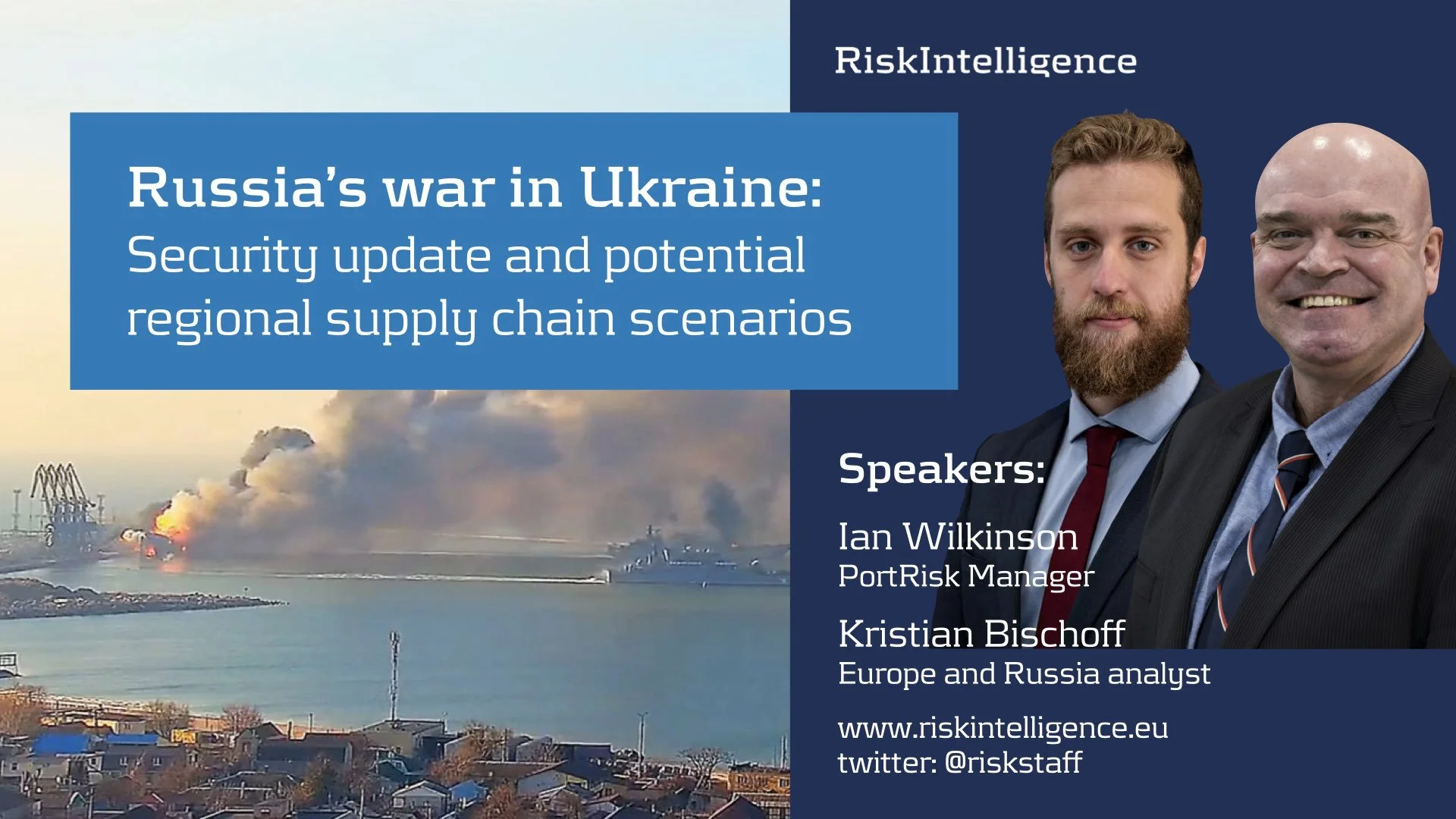
Current Ukraine conflict: Security update and potential regional scenarios
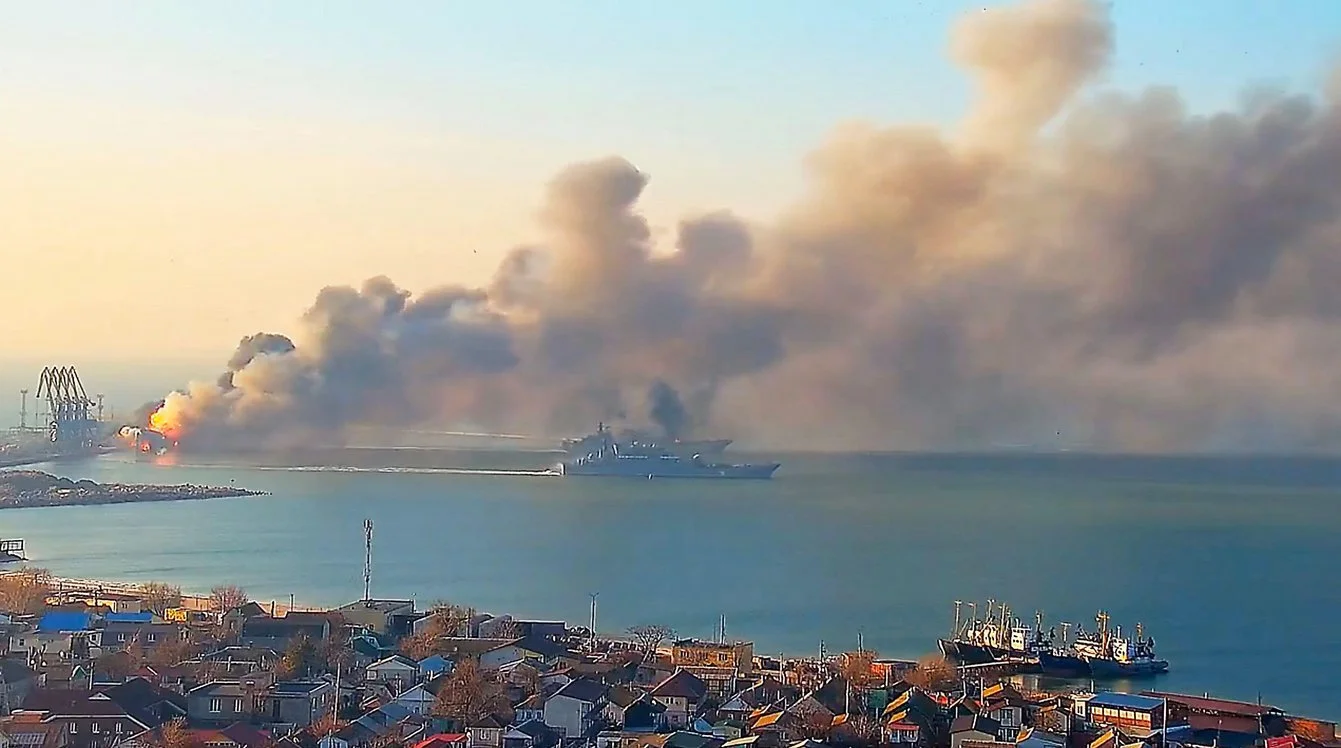
Events in the Ukraine have seen Russian forces consolidate their efforts on the East. This has provided some respite to the western port towns and cities, which were braced for a Russian push towards Odessa. That said, sea mines and hollow talk of safe passage for international vessels has meant that many vessels and some crews are still stuck.
This webinar will provide a complete conflict update, a ports and maritime update, an overview of the implications for the supply chain on land, and a look forward to potential regional scenarios. Speakers are both PortRisk Manager Ian Wilkinson and Kristian Bischoff, Europe and Russia analyst, who recently produced a security briefing paper for TAPA EMEA and will include insights from this report.
Speakers:
Ian Wilkinson, PortRisk Manager
Kristian Bischoff, Europe and Russia analyst
Host: Jim Pascoe, CCO
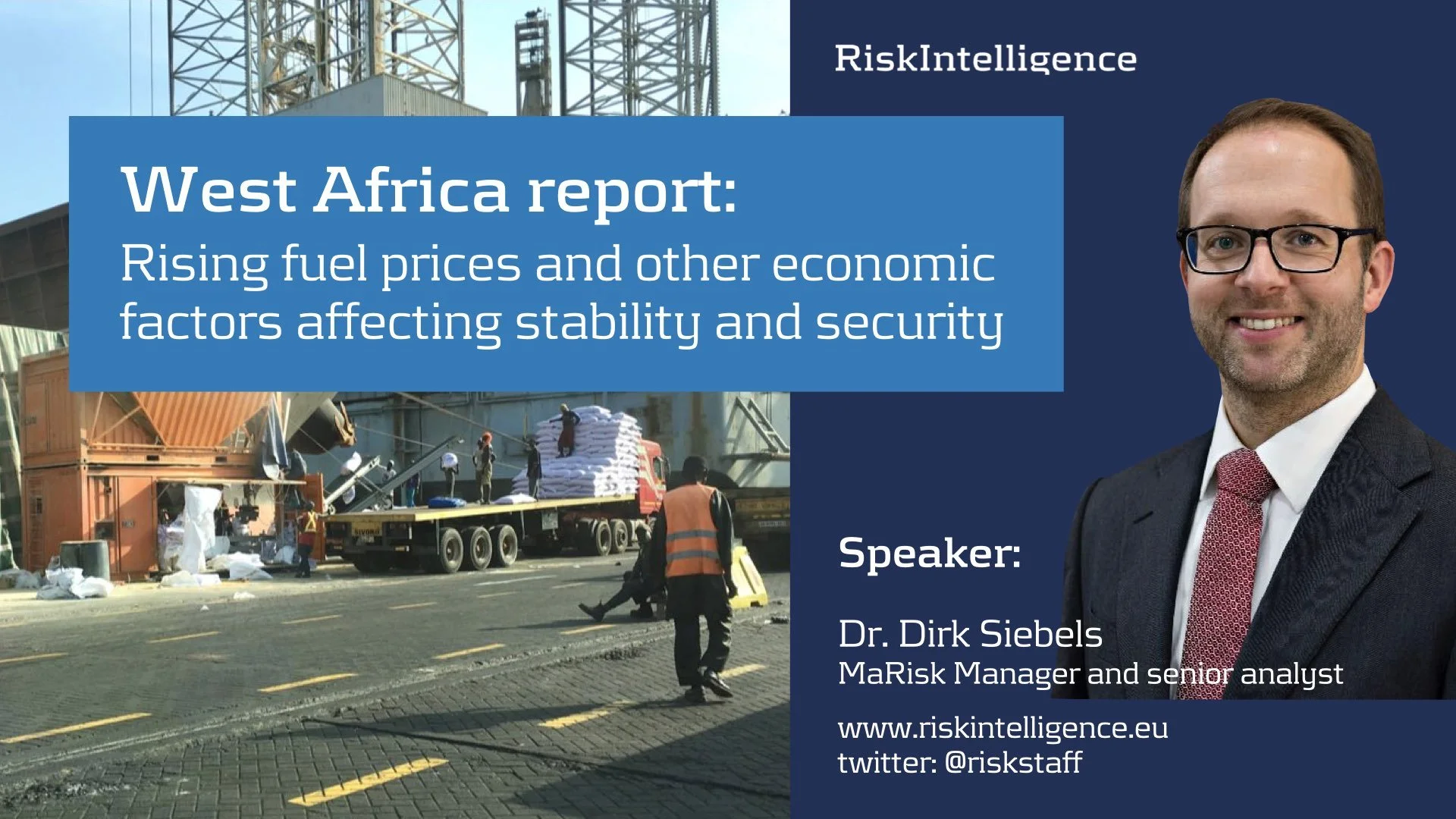
West Africa report: Rising fuel prices and other economic factors affecting stability and security
Does war in Ukraine have implications in countries around the Gulf of Guinea?
Fuel and food prices across West Africa have already increased significantly in 2021. Inflation rates are set to rise even further following the war in Ukraine and sanctions against Russia. Such price hikes will have a major impact on domestic populations, exacerbating already existing security challenges and creating lucrative opportunities for criminal groups.
Looking at recent figures and events, we will discuss potential developments over the coming months and identify key trends which must be monitored to realize future security challenges, both at sea and on land.
Speaker:
Dirk Siebels, MaRisk Manager and senior analyst
Host: Jim Pascoe, CCO
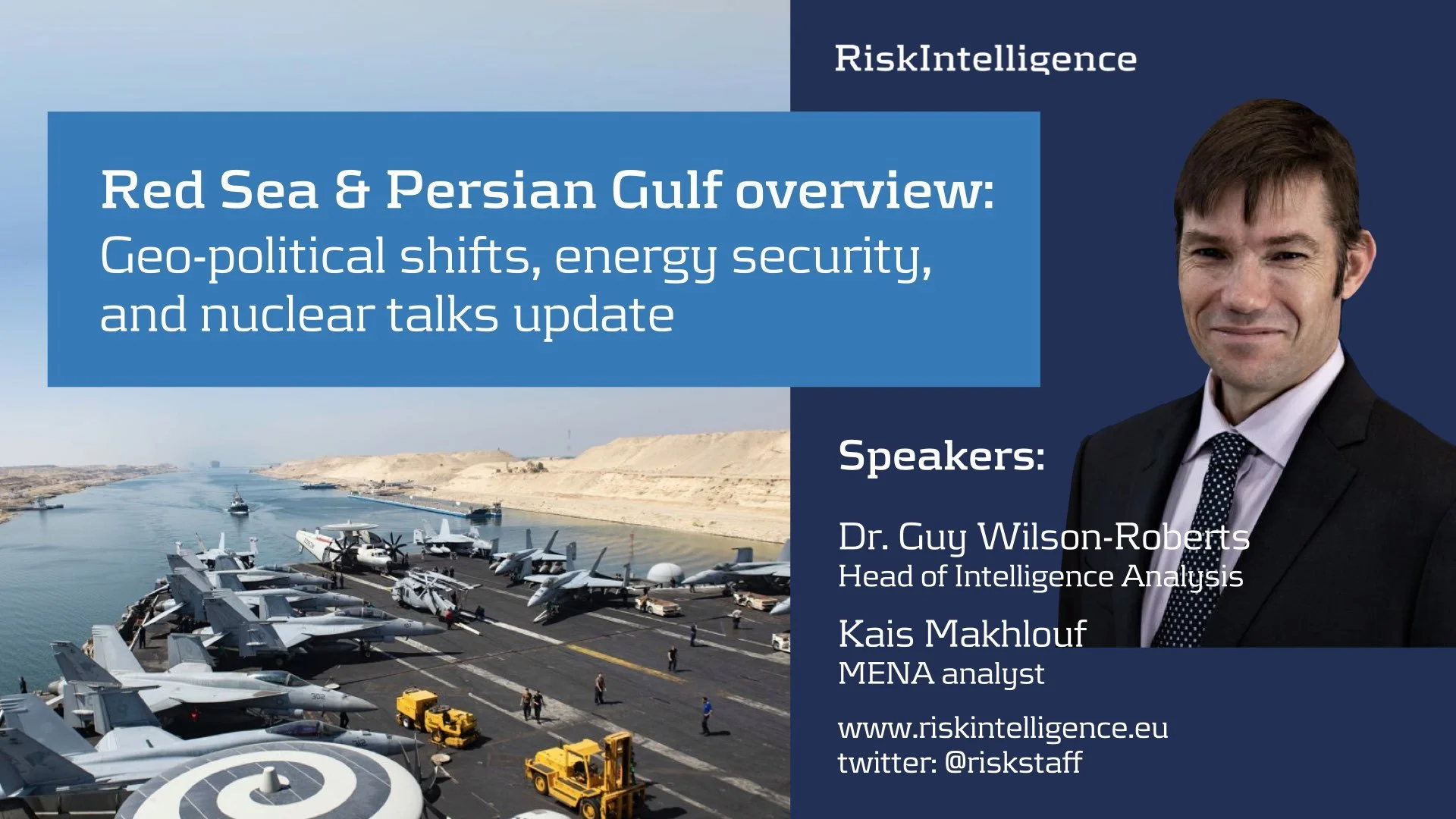
Red Sea and Persian Gulf overview: Geo-political shifts, energy security, and nuclear talks update
How will the war in Ukraine affect security in the Red Sea and Persian Gulf?
The war in Ukraine is already having an impact on security dynamics in this region. The international talks on Iran’s nuclear programme have been close to conclusion but are now threatened by Russia and the uncertain role of Israel in any outcome. The US has sought additional oil production from the Gulf States, at a time when relations have been under strain. Many regional countries have responded cautiously in their condemnation of Russia, giving primacy to their own interests.
The conflict in Yemen might benefit from a renewed diplomatic effort and the need to keep energy markets protected, but some fundamental dynamics remain unchanged. At a basic level, the reliance of the region on wheat imports from Ukraine and Russia will put pressure on local economies. All these factors make the Red Sea and Persian Gulf a region of continued challenges for maritime operators.
Speakers:
Dr Guy Wilson-Roberts - Head of Intelligence Analysis
Kais Makhlouf - MENA Analyst
Host: Jim Pascoe, CCO
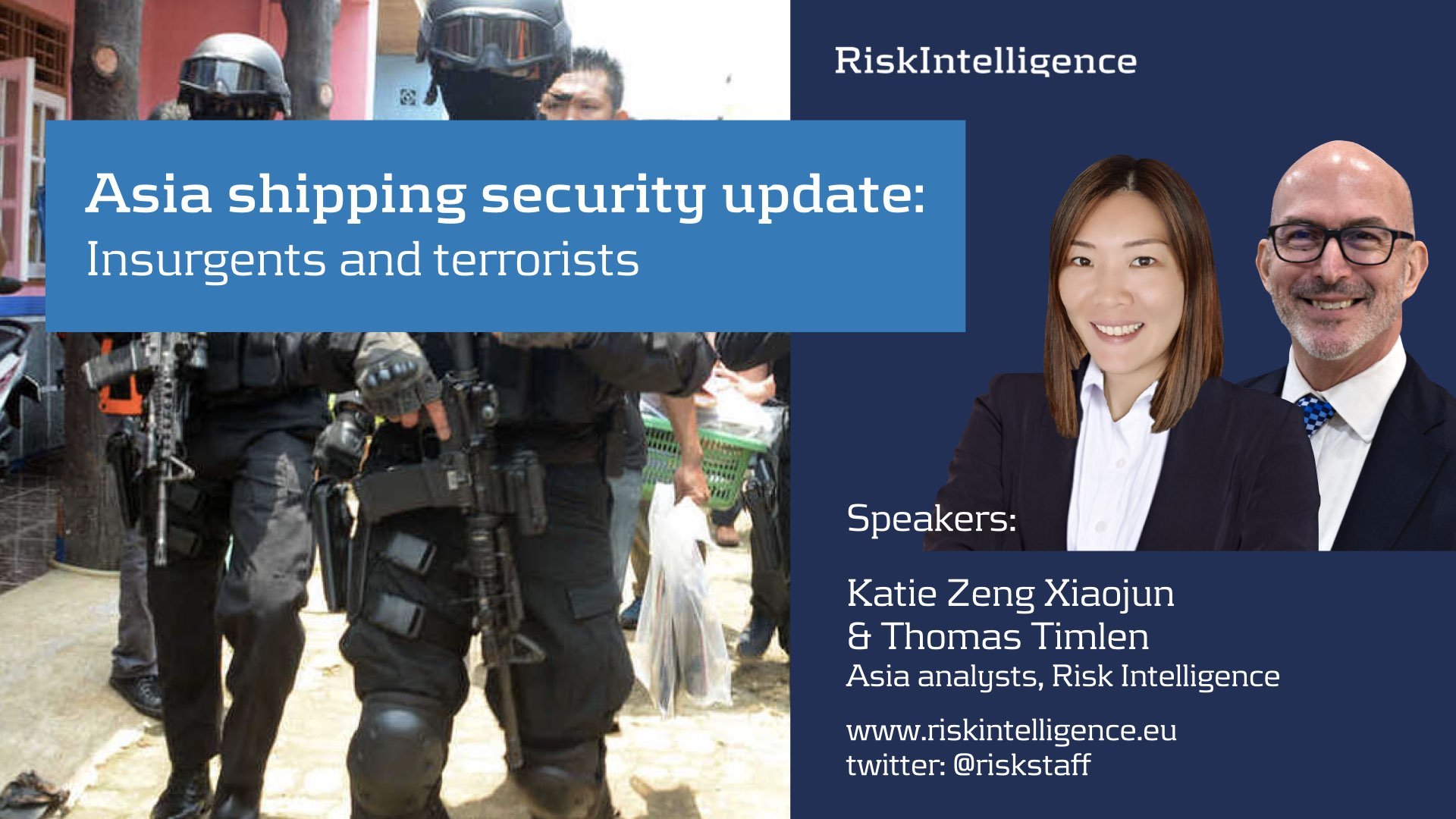
Asia shipping security update: Insurgents and terrorists
What is the impact of insurgency and terrorist activity on the maritime domain in the region?
Terrorist and insurgency groups are present throughout Asia. Although the Abu Sayyaf Group receives most of the attention with regard to the maritime domain, there are several other less conspicuous groups that are active to varying degrees. Representing a combination of militant terrorists and insurgents, in some cases overlapping in terms of ideologies and tactics, these groups continue to pose ongoing challenges for the agencies tasked with suppressing their activities. Join our webinar to learn more about the present status of these groups and the consequences for vessels and seafarers in the region.
Speakers:
Katie Zeng Xiaojun - North, south and central Asia analyst,
Thomas Timlen - South-east Asia analyst
Host: Jim Pascoe, CCO
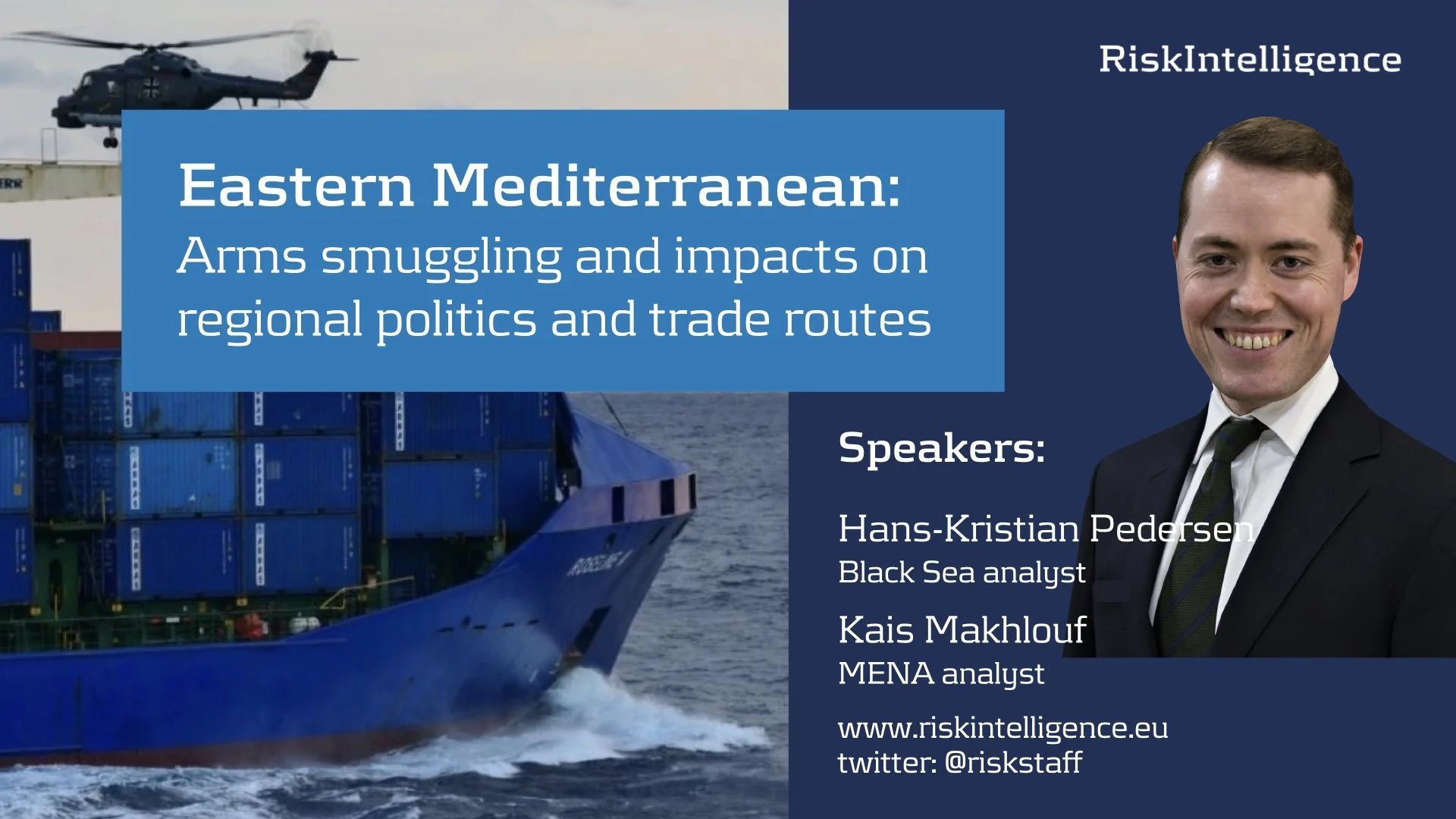
Arms smuggling in the Eastern Mediterranean
How can a desk top assessment help keep you and your company legal, compliant and give you confidence that you are offering your crew and vessel the best security options for operating in Nigeria?
Smuggling in the Eastern Mediterranean is not a new phenomenon, but recent years have focused all attention on human trafficking and irregular migration. However, similar to human trafficking, the trafficking of arms across that same area, if not always through the same routes as humans, is still a major problem.
The political discords are at the root of arms smuggling and ultimately what leads to the increase in human trafficking and much would be gained in understanding how arms flows impact the region’s politics and trade routes. Indeed, it is no secret that shipping is both a victim and an actor in this issue.
Join our webinar to learn more about arms smuggling in the Eastern Mediterranean, and gain insight into a business where the private and public sector are not always distinguishable, and where profit is not always the goal.
Speakers:
Kais Makhlouf - MENA analyst
Hans-Kristian Pedersen - Europe and Black Sea analyst
Host: Jim Pascoe, CCO
Speakers in the War in Ukraine series:
Our webinars are held by our specialised analysts and system managers with the occasional guest speaker. Read more about them and our host, Jim Pascoe, here.

Jim is our webinar host and Chief Commercial Officer at Risk Intelligence. He served as an officer in the Royal Marines, where he specialised in information exploitation. Whilst serving in UK Forces he commanded troops involved in maritime interdiction, maritime counter terrorism and conventional land operations.
Jim typically hosts the webinars, moderating discussions and making sure the audience’s questions are answered.

Dirk is a Senior Analyst and responsible for analysis on countries in sub-Saharan Africa. He holds a PhD from the University of Greenwich in London. His research largely concentrates on maritime security issues in sub-Saharan Africa, including the role of ports and maritime trade, IUU fishing, offshore energy production and the evolution of private maritime security providers.
Dirk has contributed to a number of research projects, including the annual State of Piracy report published by Oceans Beyond Piracy (now renamed as Stable Seas).
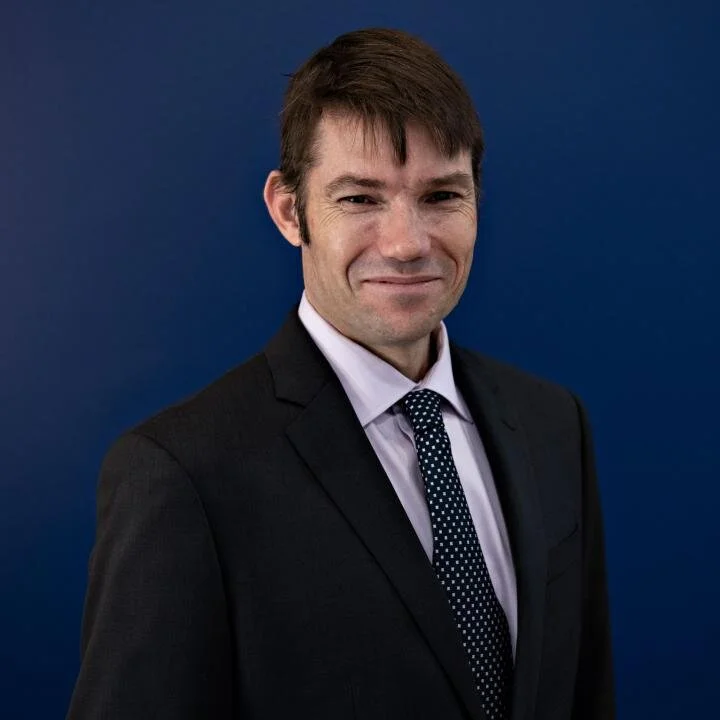
Guy is responsible for managing the assessment and analysis components of Risk Intelligence products. His own research areas include Oceania and East Asia, as well as transnational organised criminal groups operating in the maritime realm.
Prior to joining Risk Intelligence in 2010, Guy worked on energy security in the private sector, and was a policy advisor for the New Zealand Police and the Ministry of Defence. He has a PhD in political science from the University of Auckland and worked in academia for a number of years following conferment.

Ian is PortRisk Manager and served 27 years in the Royal Navy as an electronic warfare specialist, working in a wide variety of ships and shore establishments. Ian was the UK’s in-theatre counter-piracy analyst at the UKMCC in Bahrain, and attended regular industry forums and represented the UK at the ONI Illicit Activities and Counter-Terrorism Conference in Washington DC.
Since leaving the military Ian has worked in Nairobi for a private security company arranging armed and unarmed security and advice to shipping clients transiting the High Risk Area, before joining Risk Intelligence.

Kais works as an analyst and focusses on the MENA region, as well as on the Eastern Mediterranean. He has previous work experience in the private intelligence sector and as a military linguist in the Danish Armed Forces. Kais holds a BSc in International Business and Politics and a master's degree in Middle East studies.

Hans-Kristian’s analytical focus includes the Mediterranean and Black Sea. He is also the point of contact for interns and Secretary of the Risk Intelligence Advisory Board. He holds a master’s degree in political science from Durham University, and his previous work experience includes the Royal Danish Navy and analysis work in Nepal.
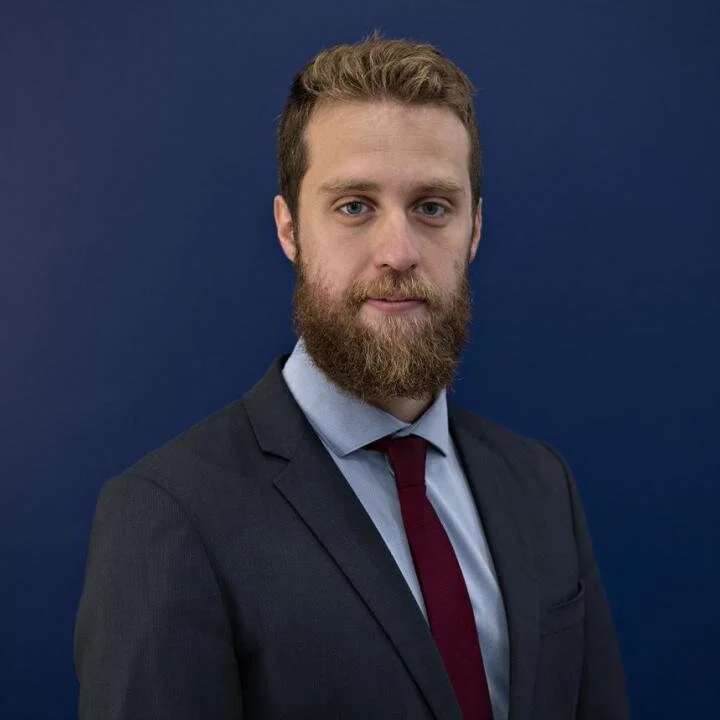
Kristian is our Europe and Russia analyst, as well as having a focus on emerging technological threats like cyber and electronic warfare. Kristian has previously served in the Danish Army, and worked with analysis and physical security in international NGOs and emergency response organisations.
Additionally, he has been a part of the Danish Atlantic Treaty Association, a Copenhagen based think-tank researching issues on international security.
Kristian holds an undergraduate degree in Emergency and Risk Management, and a master’s degree in Security and Strategy from the University of Exeter.

Thomas Timlen, based in Singapore, is our Southeast Asia Analyst. His background addressing maritime security threats began in the 1990s as an industry representative with BIMCO. Since then he has been involved with a variety of security related work including research conducted as a Visiting Research Fellow at the S. Rajaratnam School of International Studies. He holds a BSc in Business Administration and Management from Boston University.

Jim is our webinar host and Chief Commercial Officer at Risk Intelligence. He served as an officer in the Royal Marines, where he specialised in information exploitation. Whilst serving in UK Forces he commanded troops involved in maritime interdiction, maritime counter terrorism and conventional land operations.
Jim typically hosts the webinars, moderating discussions and making sure the audience’s questions are answered.