
Berlingske | Does NATO still deter Putin if the U.S. leaves? 17 experts have a surprising answer
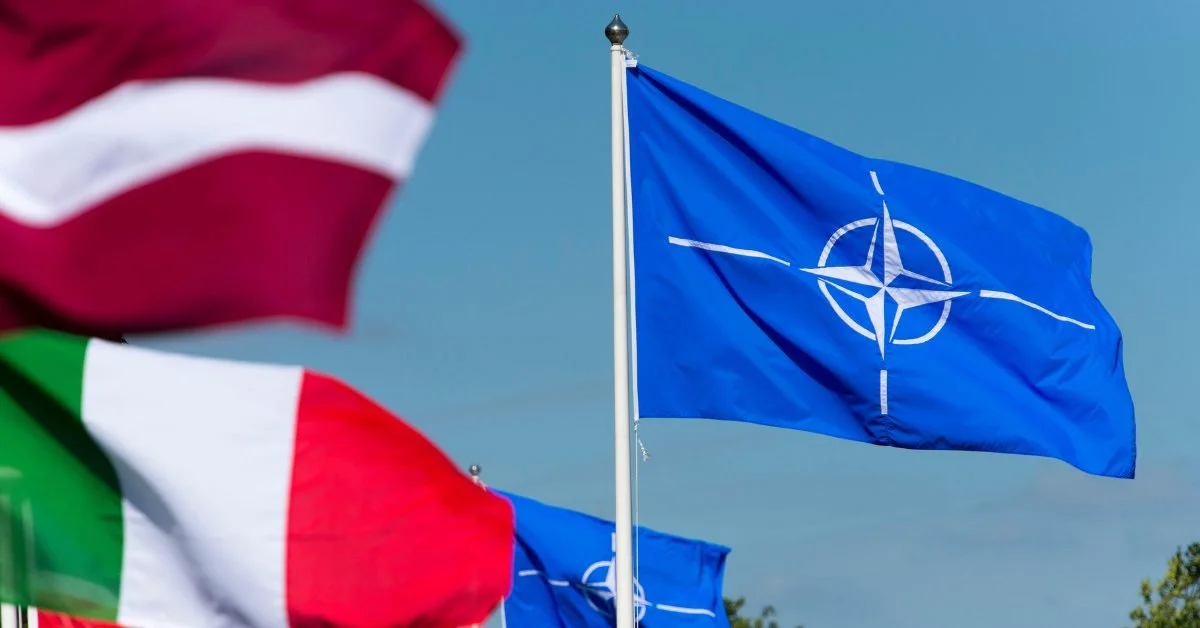
NATO flag representing alliance. Source: Alamy
Hans Tino Hansen, CEO of Risk Intelligence, was recently interviewed by Berlingske for a round-up on NATO’s deterrence capacity and the implications of a possible U.S. withdrawal from the alliance.
29 April 2026
The original article was published on 14 April 2026 on Berlingske’s website.
Hans Tino Hansen emphasises that nuclear deterrence depends on credibility, meaning it only works if Russia believes that nuclear weapons could realistically be used in response to an attack.
In this context, he notes that if the United States were to leave NATO, deterrence would hinge on whether Russia believes that the United Kingdom and France would be willing to escalate to nuclear use in defence of other NATO members.
He further adds that deterrence is based on perception, in the sense that Russia must see a real risk of nuclear escalation for it to function. Without that belief, the credibility of deterrence is reduced, even if nuclear capabilities remain in place.
Read the full article in Danish (behind paywall)
GET A VOYAGE RISK ASSESSMENT (VRA):
Our Voyage Risk Assessments provide detailed, voyage-specific analysis of vessels, routes, and threats, helping operators understand risks and implement effective mitigation measures. Learn more about obtaining a Voyage Risk Assessment and how it can support your operations.