

Security or volatility? Grey hulls and gas carriers mark Egypt’s return
Egypt’s navy is undergoing a thorough modernisation process, accompanied by a marked increase in its naval capabilities. In recent years, Egypt has acquired more than a few modern vessels, including French-Italian FREMMs, increased its maritime presence in both the Red Sea and the Mediterranean and engaged in large scale exercises with its partners. Egypt has inaugurated its new 3rd July naval base on the Mediterranean, close to the Libyan border, only a few years after opening its Berenice base on the Red Sea. At the same time, it has engaged in technology transfer to develop its native naval industrial capacity.
This is in line with Egypt’s goal to project power on both its maritime flanks. While such an ambition had already been formulated in years past, it comes at a time of heightened awareness among Eastern Mediterranean decisionmakers of the necessity of power projection at sea. Civilian leaders, and no longer only military figures, are expecting to compete for offshore resources in the Mediterranean.
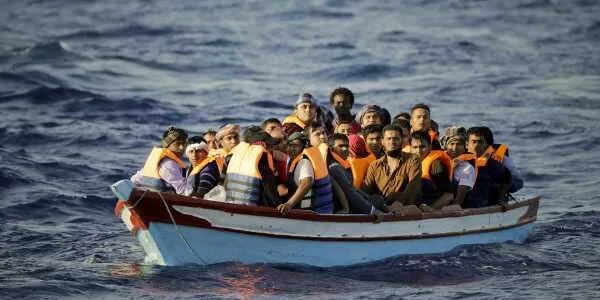
The route less taken: Irregular migration in the Black Sea region
Irregular migration into Western Europe often grabs headlines. But the reporting focus is mostly on the numerous attempts at crossing the Mediterranean from North African shores to Italian or Greek islands. And though Mediterranean crossings account for the most attempts, there are other lesser reported routes which present the same security concerns to regular shipping and logistics operations.
One such route is crossing the Black Sea. Though irregular migration is assessed as occurring at a lesser rate than across the Mediterranean, it cannot be discarded. Poverty, unemployment, corruption, conflict, and political instability are all factors that ‘push’ humans to migrate – and the Black Sea region is no different. Additionally, as regulation increases in the Mediterranean, migrant traffic may well increase in the Black Sea.

Cautious optimism as Malaysian and Philippine military forces continue to reduce the maritime security impact of the Abu Sayyaf Group
Notorious for its use of kidnap for ransom operations to finance its militant insurgency operations, the Abu Sayyaf Group's impact on maritime security has been curbed significantly by an enhanced military response by both Malaysian and Philippine forces in recent years. Still, the risk remains that ASG militants could take desperate measures to retain some control.
Over four years ago, on Thursday, 23 March 2017, three speedboats with armed men on board approached the SUPER SHUTTLE TUG 1 as it was en route from Cebu to General Santos with a Ro/Ro in tow. The tug was boarded and its captain and chief engineer were kidnapped. Philippine Armed Forces responding to the attack captured one perpetrator and one speedboat. Within four days both captives had been freed, and no ransom was paid.

Anti-lockdown conspiracies and social media pages are driving extremist right-wing recruitment
The right-wing extremist and terrorist threat is growing, as various groups across Europe are effectively using the Covid-19 pandemic and related conspiracy theories to recruit and radicalise not only more normal people, but also current and former military personnel. More people are being subjected to extremist content online as covid-19 conspiracy theories and anti-lockdown pages on social media are becoming more popular.
A current manhunt for a serving soldier in Belgium, as well overt attempts at recruitment of military personnel by Danish anti-lockdown groups highlight how they continually attempt to bring persons with tactical skillsets to their groups. Kristian Bischoff has this briefing on the threat.

Smuggling via the Balkan Route – a backstreet supply chain shielded by complexity
Smuggling activity on the Balkan Route into Europe is more readily and easily undertaken due to a lack of comprehensive law enforcement and issues of corruption. Established smuggling routes and procedures have less of a direct impact than when smuggling occurs within regular lawful logistics operations. But negative implications cannot be ruled out.
The Balkan Route, as it is known, is a term describing a loosely defined smuggling route, or corridor, identifying the geographical focus area of the smuggling activity. The route is often considered to be one of the main smuggling routes for illicit drugs and narcotics, particularly heroin, into Europe. It runs through the Balkan countries and is therefore predominantly a land-based route, though not exclusively as there are connections to maritime corridors as well.

Off the US sanctions list: Is Sudan returning to the global market?
Sudan is once again engaging with the wider world, having been removed from the US's sanctions list in December of 2020. The country is likely to return to the global markets it had been cut off from since the 90’s, with commitments of investment from both Saudi Arabia and US debt relief funds. But recent changes must still prove durable enough before Sudan's ports can open to international shipping again.
A weak infrastructure and chronic instability will be the main obstacles to Sudan’s return to the international scene. Domestic political tensions could yet derail the country’s transition. The government must prioritise its ports to stay on track. So what will it take for Sudan do to attract investors and trade to its stretch of coast?

Will China’s intensified territorial claims affect the innocent passage of the South China Sea for merchant shipping?
In 2012, China revamped its maritime strategy to become a “maritime power”, and incidents involving Chinese vessels in the South China Sea (SCS) increased significantly between 2012-2015. In 2020, numbers fell to a single incident and China's island-building efforts in the SCS appear to be nearing completion.
China’s interest in the South China Sea (SCS) dates back to the end of World War II and the defeat of Japan. The then Republic of China made repeated territorial claims to the SCS, including the Paracel and Spratly Islands, and opened research stations, defence silos and military-grade runways on the Fiery Cross and Subi reefs. Asia analyst Katie Zeng Xiaojun has this briefing for merchant shipping.

The attack on Palma in Mozambique: An insurgency getting out of hand?
The strategically important city of Palma in Northern Mozambique was attacked by insurgents from Ahlu Sunnah Wal Jammah on 24 March. The insurgents managed to grab control of large sections of the city and international personnel from the area were quickly evacuated.
Dr. Thomas Mandrup, Africa consultant, provides an assessment of the current security situation in the area and the impact on offshore operations, and of the emerging threat to port facilities in Pemba and outlook for shipping.

Recent bombing and arson attacks highlight threats against vaccine supply chains and infrastructure
Recent attacks against Covid-19 test centres in the Netherlands and Denmark highlights the extremist element to the anti-lockdown groups. These elements show that the movement likely wants to strike either symbolic targets related to the effort against Covid-19, or that they directly want to disrupt the effort itself. This may mean a new threat to the vaccine supply chain.
Capabilities in attacks may range from improvised incendiaries and explosives as seen in March, but the use of firearms cannot be entirely ruled out. Advanced tactics as seen in general attacks by individuals with terrorism tradecraft is unlikely.

Turkey and Greece: A seismic ripple in the eastern Mediterranean?
Last year saw what initially looked like a significant increase in tension and enmity in the eastern Mediterranean. The cause for concern was the activity of Turkish seismic survey vessels and the accompanying escort by the Turkish navy. At its most calamitous, this culminated in what might best be described as an accident, involving a minor collision between Greek and Turkish naval vessels in the contested area that took place in August 2020. Ankara stated it was solely undertaking seismic explorations in the eastern Mediterranean. However, others viewed the scenario as an exercise in asserting geopolitical stature.

South-east Asia: Is the Abu Sayyaf Group a spent force?
March saw a return of heightened concerns that the Abu Sayyaf Group (ASG) could again target commercial cargo vessels navigating the waters along the Sulu Archipelago. The ASG has been associated with the kidnappings of 85 seafarers from vessels operating in the area since 2016. However, the spark that set these recent discussions alight sprang from an incident that shared few characteristics with typical ASG-related kidnap for ransom activity.
On the morning of 3 March, the bulk carrier AKIJ PEARL was approached by a single-outboard motor speedboat while navigating within a transit corridor south-west of Sibutu. The speedboat came within ten metres of the vessel, and three persons on board attempted to secure the speedboat to the vessel using ropes. As they were doing so, they gestured towards a number of empty jerrycans, and it appeared that they were asking the vessel’s crew to provide them with fuel.

Armed forces arrest Myanmar President U Win Myint and NLD leader and State Counsellor Aung San Suu Kyi
On 1 February, the Myanmar armed forces, or Tatmadaw, arrested the current President, U Win Myint, the head of government, NLD leader and State Counselor Aung San Suu Kyi and other senior officials and declared a one-year state of emergency.
The army-appointed Vice President Myint Swe took over as acting president and handed his power to the country's military chief, Senior General Min Aung Hlaing. Although no major violence was reported, there was an increased security presence, and protest calls across the country, particularly in Naypyidaw and Yangon.

Libya: Wealthy businessman Ali Dbeibah from Misrata to become next Prime Minister
The negotiations in Geneva to solve the Libya conflict has led to the Libyan Political Dialogue Forum voting for a new government and nominating the wealthy businessman Ali Dbeibah from Misrata to become the next Prime Minister.
The outcome of the LPDF vote surprised many observers. Dbeiba is to steer the country towards the next elections in December 2021, with a mandate limited in principle to 10 months.

Is the Gulf of Mexico becoming a new piracy hotspot?
Piracy in the Gulf of Mexico has increased since 2016, targeting oil platforms and vessels operating in the oil industry. Although Covid-19 caused major disruption and challenges to many industries, pirate attacks and petroleum theft continued without disruption.
Corruption, organised crime and cartel activities has challenged the Mexican government since the 1960s. As organised crime groups are motivated by profits, they participate in a wide range of lucrative activities, including petroleum theft.

Threat of cocaine trafficking to trans-Atlantic shipping operations remains unchanged as drug industry proves resistant to Covid-19 nightlife lockdown
Even as Covid-19 caused major disruptions to industries, supply-chains, and consumer behaviour, few lines of business have managed the challenges better than the global cocaine industry, with traffickers proving to be very flexible. With shipments increasing in size, the threat to trans-Atlantic shipping operations of cocaine smuggling persists.
Europe is one of the main markets for cocaine in the world, with an estimated import of more than 100 tonnes of product entering major European ports annually, with a market value of +10 billion EUR. Most of the bulk traffic is facilitated by large and powerful criminal organisations, with local criminal groups taking over at distribution levels.

Informal blockade of the Kerch Strait creates uncertainty for shipping operations in Eastern Ukraine
The continuing conflict in Eastern Ukraine has resulted in an informal blockade of the Kerch Strait, restricting usual shipping transport and posing the threat of vessel seizure and crew intimidation.
Tension remains in the Black Sea region and the Sea of Azov and the Kerch strait, connecting the two seas, is no different. Of the issues for vessels operating in the area - vessel transiting the Kerch Strait are more likely than not to encounter days of delays, due to irregular blockade measures of the strait which creates uncertainty for shipping operations.

A possible new WBIED campaign by the Houthis may have been launched in late 2020 hitting Saudi Led Coalition oil assets
The Red Sea off the Jizan and Yemeni coasts may be experiencing the latest Houthi WBIED campaign against Saudi Led Coalition (SLC) assets. There has recently been a spate of mine and WBIEDS attacks hitting Saudi oil assets in particular, with the attackers managing to reach some significant infrastructure and potentially disrupting oil supply in parts of Saudi Arabia.
Vessels not belonging to Coalition member countries or companies have been targeted due to their proximity to Saudi oil assets throughout December.

Operational delays are serious, but human trafficking will be the main threat to lorry traffic in case of a No-Deal Brexit
The uncertain situation regarding the unfruitful Brexit negotiations, and a potential British crash out of the EU on 31 December will benefit human traffickers, who can exploit migrants' hopes of crossing the Channel, framing the no-deal as a hard deadline of entry into the UK. Large numbers of migrants continue to linger in north-western Europe, waiting for a possibility to get to the UK either as stowaways or on organised human trafficking transports.

Red Sea update 9 Nov: New players and different rules are changing the game in the Red Sea and Gulf of Aden. How do the changes impact maritime trade?
The Red Sea attracts both regional and global powers. Neighbouring countries and their partners are increasing the flow of trade to and from the region’s southern seaboard, piracy has decreased as regional conflicts and tensions attract an increasing amount of blue water navies, intent on defending their countries’ interests.
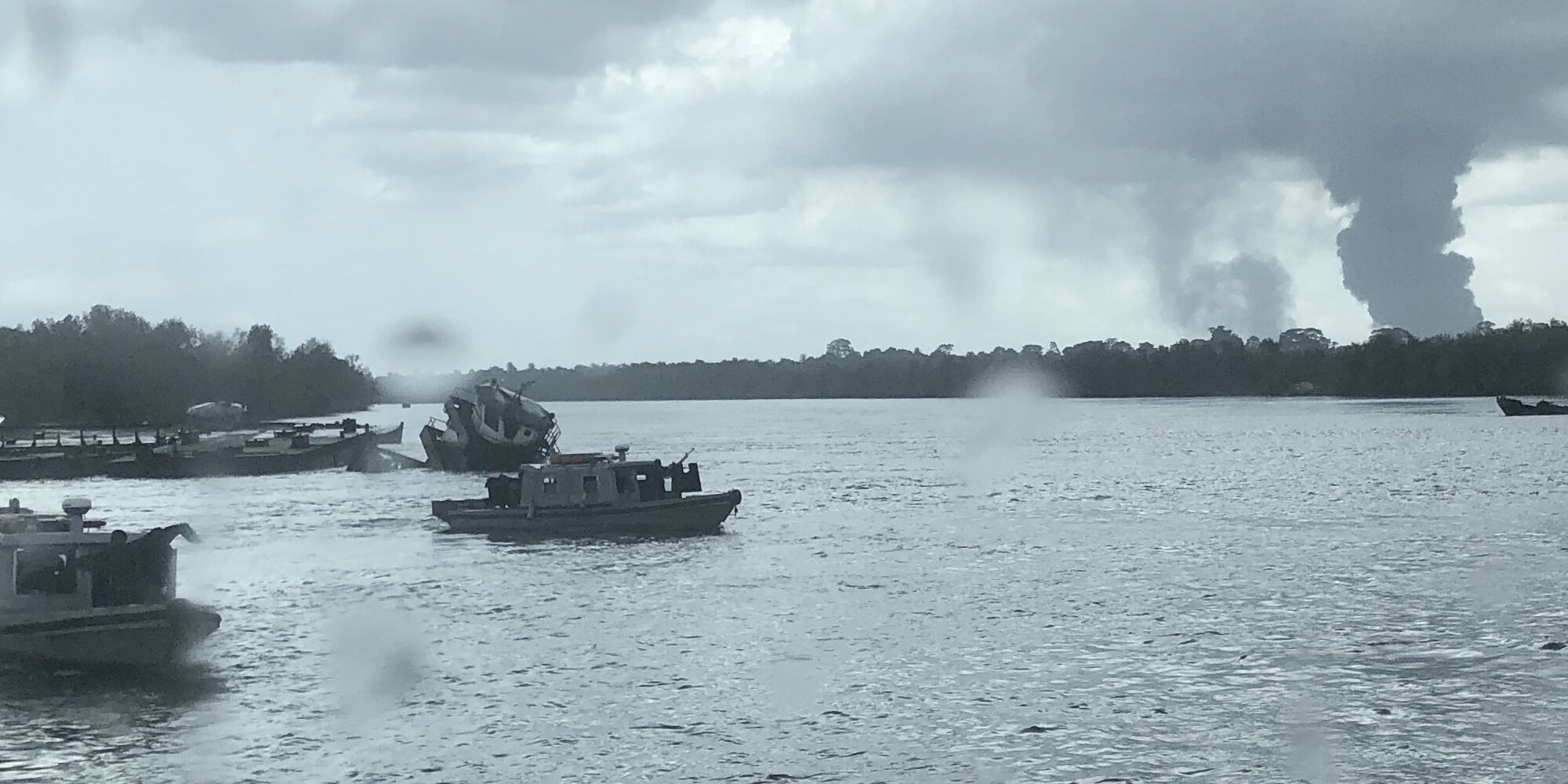
Will recent naval exercises in the Gulf of Guinea lead to significant improvements for maritime security off Nigeria?
At the onset of the dry season in the Gulf of Guinea, piracy patterns from previous years suggest increasing threat levels for shipping operations. The area has been the subject of much debate with BIMCO's CEO calling out the "complete absence of effective law enforcement" and concluding that the region's current capacity building is having "no effect whatsoever". Is he right?