

Is the Gulf of Mexico becoming a new piracy hotspot?
Piracy in the Gulf of Mexico has increased since 2016, targeting oil platforms and vessels operating in the oil industry. Although Covid-19 caused major disruption and challenges to many industries, pirate attacks and petroleum theft continued without disruption.
Corruption, organised crime and cartel activities has challenged the Mexican government since the 1960s. As organised crime groups are motivated by profits, they participate in a wide range of lucrative activities, including petroleum theft.

Threat of cocaine trafficking to trans-Atlantic shipping operations remains unchanged as drug industry proves resistant to Covid-19 nightlife lockdown
Even as Covid-19 caused major disruptions to industries, supply-chains, and consumer behaviour, few lines of business have managed the challenges better than the global cocaine industry, with traffickers proving to be very flexible. With shipments increasing in size, the threat to trans-Atlantic shipping operations of cocaine smuggling persists.
Europe is one of the main markets for cocaine in the world, with an estimated import of more than 100 tonnes of product entering major European ports annually, with a market value of +10 billion EUR. Most of the bulk traffic is facilitated by large and powerful criminal organisations, with local criminal groups taking over at distribution levels.

Informal blockade of the Kerch Strait creates uncertainty for shipping operations in Eastern Ukraine
The continuing conflict in Eastern Ukraine has resulted in an informal blockade of the Kerch Strait, restricting usual shipping transport and posing the threat of vessel seizure and crew intimidation.
Tension remains in the Black Sea region and the Sea of Azov and the Kerch strait, connecting the two seas, is no different. Of the issues for vessels operating in the area - vessel transiting the Kerch Strait are more likely than not to encounter days of delays, due to irregular blockade measures of the strait which creates uncertainty for shipping operations.

A possible new WBIED campaign by the Houthis may have been launched in late 2020 hitting Saudi Led Coalition oil assets
The Red Sea off the Jizan and Yemeni coasts may be experiencing the latest Houthi WBIED campaign against Saudi Led Coalition (SLC) assets. There has recently been a spate of mine and WBIEDS attacks hitting Saudi oil assets in particular, with the attackers managing to reach some significant infrastructure and potentially disrupting oil supply in parts of Saudi Arabia.
Vessels not belonging to Coalition member countries or companies have been targeted due to their proximity to Saudi oil assets throughout December.

Operational delays are serious, but human trafficking will be the main threat to lorry traffic in case of a No-Deal Brexit
The uncertain situation regarding the unfruitful Brexit negotiations, and a potential British crash out of the EU on 31 December will benefit human traffickers, who can exploit migrants' hopes of crossing the Channel, framing the no-deal as a hard deadline of entry into the UK. Large numbers of migrants continue to linger in north-western Europe, waiting for a possibility to get to the UK either as stowaways or on organised human trafficking transports.

Red Sea update 9 Nov: New players and different rules are changing the game in the Red Sea and Gulf of Aden. How do the changes impact maritime trade?
The Red Sea attracts both regional and global powers. Neighbouring countries and their partners are increasing the flow of trade to and from the region’s southern seaboard, piracy has decreased as regional conflicts and tensions attract an increasing amount of blue water navies, intent on defending their countries’ interests.
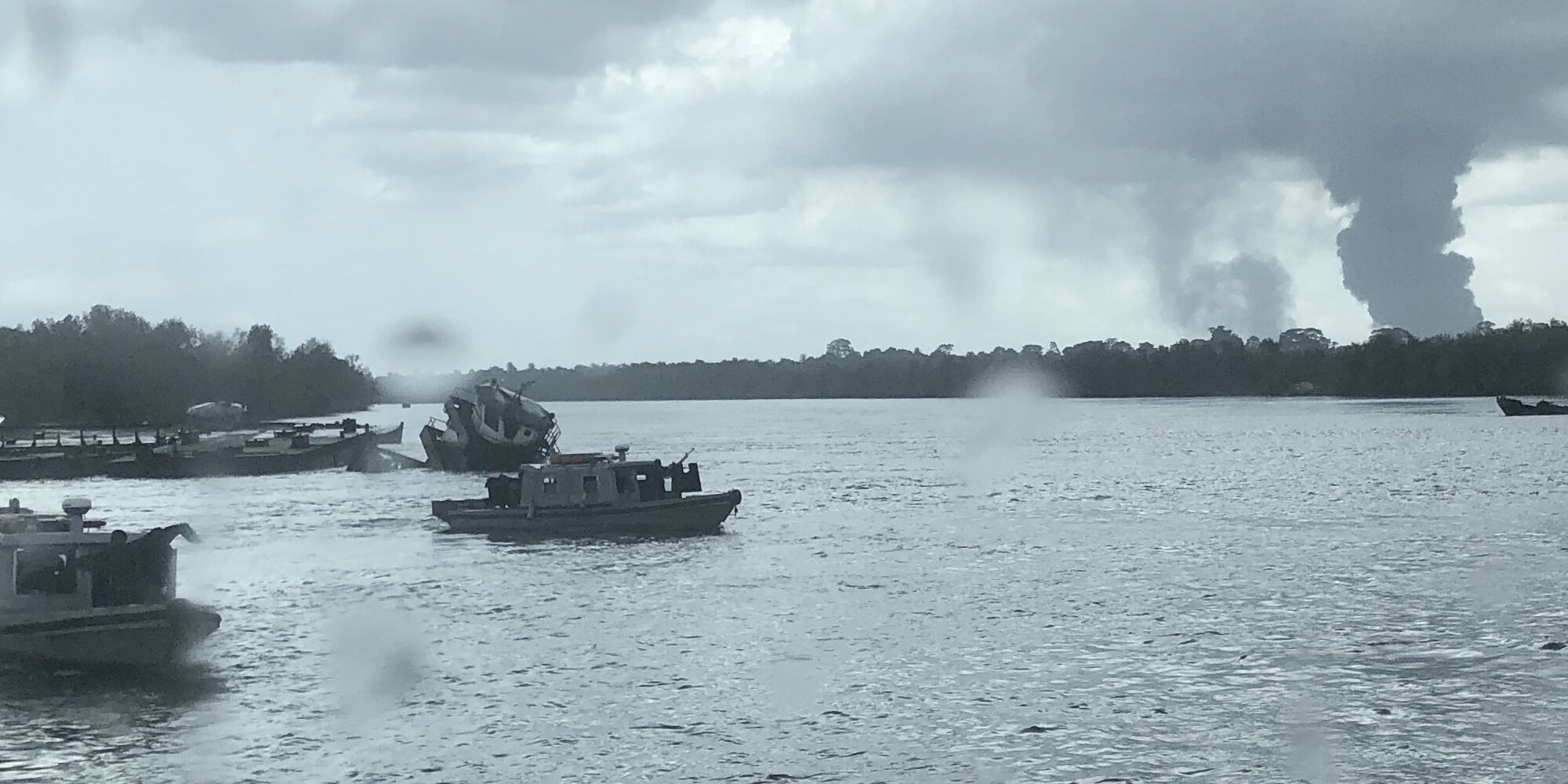
Will recent naval exercises in the Gulf of Guinea lead to significant improvements for maritime security off Nigeria?
At the onset of the dry season in the Gulf of Guinea, piracy patterns from previous years suggest increasing threat levels for shipping operations. The area has been the subject of much debate with BIMCO's CEO calling out the "complete absence of effective law enforcement" and concluding that the region's current capacity building is having "no effect whatsoever". Is he right?

Libya update Sep 25: Chinese vessel bound for Libya to lift oil after a blockade on oil exports is partially lifted
The Marlin Shikoku, owned by a Chinese state-run company, is bound for Libya, set to arrive on 27 September to lift oil after a blockade on oil exports is partially lifted. Libyan oil fields and terminals had been stopped since January 2020 as the fight for the control of the oil revenue prevented any agreement between rival factions.